A successful groundwater treatment system starts long before water reaches the first filter. Effective planning begins with understanding five key factors.
1. How Much Water Will Be Discharged?
Flow rate helps determine the system size, media requirements, and capacity needed to treat water continuously throughout dewatering operations.
2. What Is in the Water?
Water sampling identifies the constituents that must be removed to meet discharge standards. Testing should also account for iron, manganese, suspended solids, and other factors that may affect treatment performance.
3. How Long Will Treatment Be Required?
Project duration helps calculate media life and determine whether media can support the full project or will need to be exchanged periodically.
4. Where Will the Treated Water Go?
Discharge to onsite storage, a sanitary or storm sewer, or a surface water body can introduce different permitting, capacity, erosion control, and water quality requirements.
5. How Much Space Is Available?
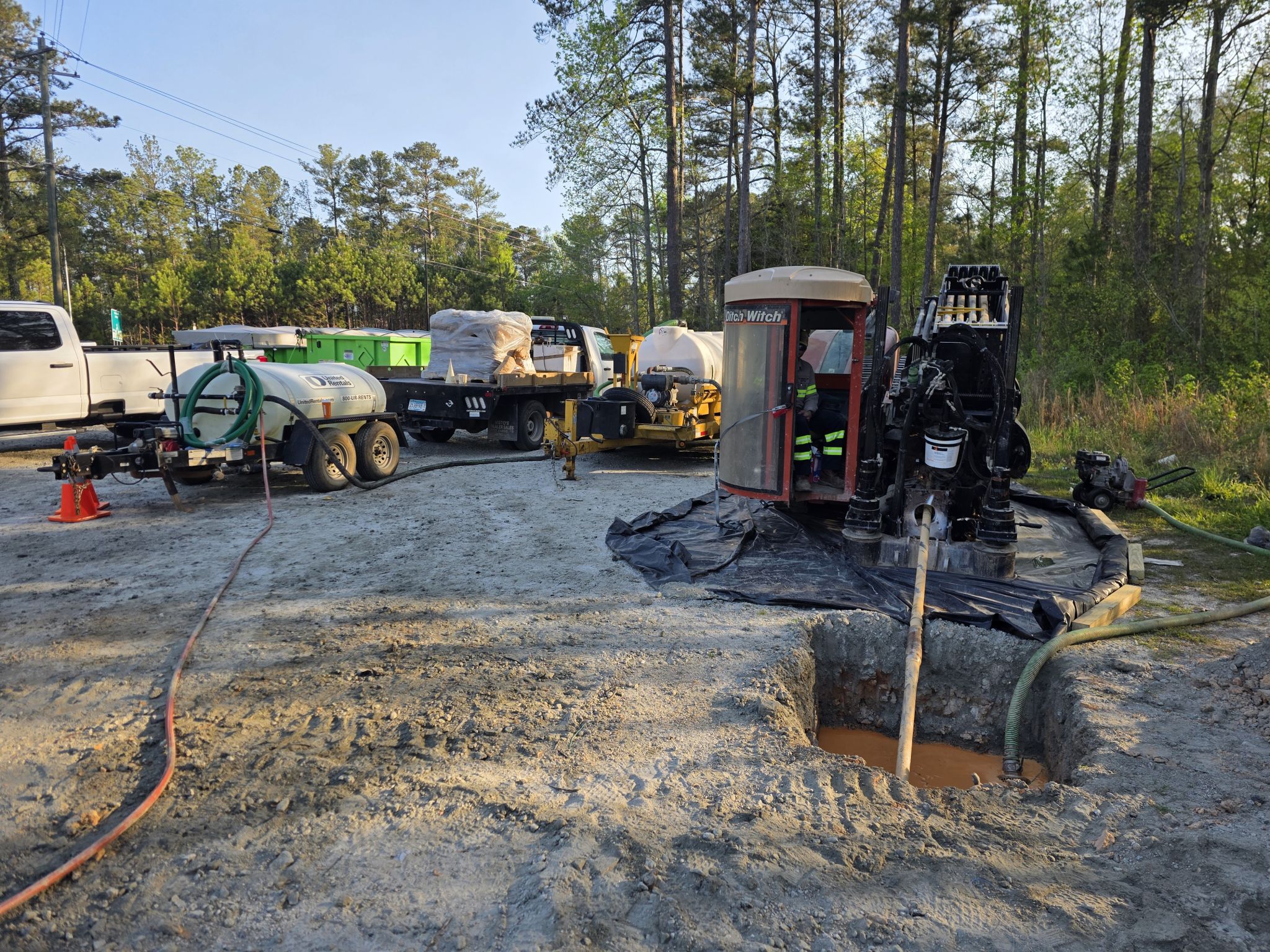
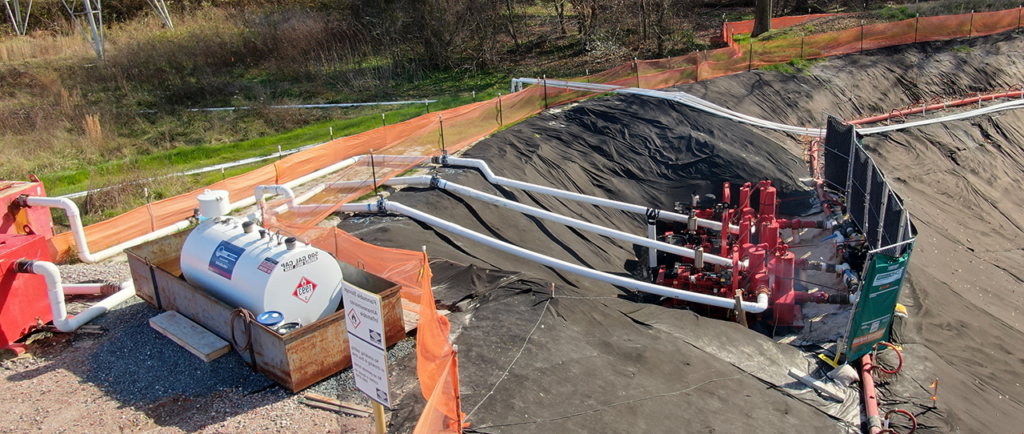
The treatment system must fit safely within the site layout while accounting for access, logistics, equipment weight, excavation, and shoring. Higher flow rates typically require a larger treatment footprint.
Evaluating these factors early helps teams design a treatment strategy that supports compliance, site operations, and reliable performance from startup through project completion.
About Griffin Fluid Management
Engineered to Solve. Delivered with Excellence. With decades of field-tested project management expertise, Griffin Fluid Management turns complexity into clarity and planning into performance.