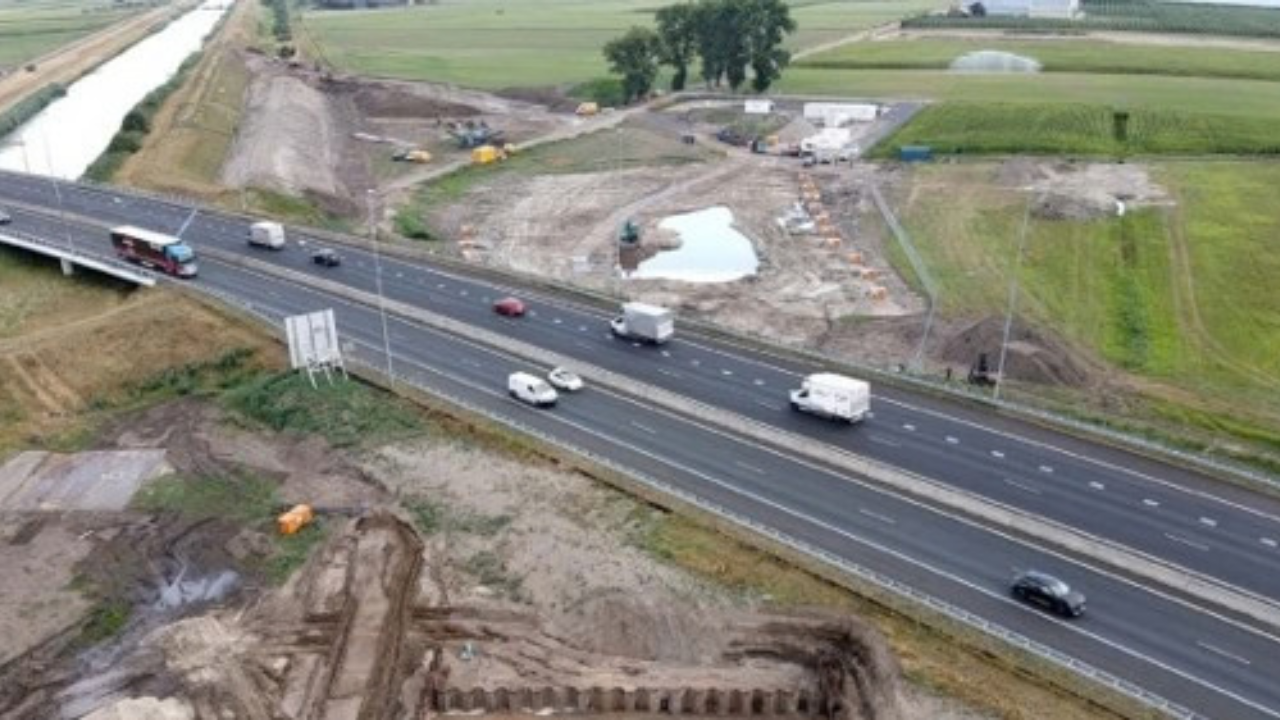
The Oostelijke Langstraat area development is strengthening flood protection for ‘s-Hertogenbosch and improving traffic safety along the A59 motorway in the Netherlands. Part of the project is the construction of a new underpass beneath the highway. The structure is being built on the north side of the road, on a temporary construction platform, before being slid into its final position during a scheduled nine-day road closure.
To make that possible, Bronbemaling.com, working for contractor combination Mourik-BESIX, designed an integrated dewatering approach that keeps the construction site dry while protecting the surrounding area throughout the works.
Preparing Both Sides of the Crossing
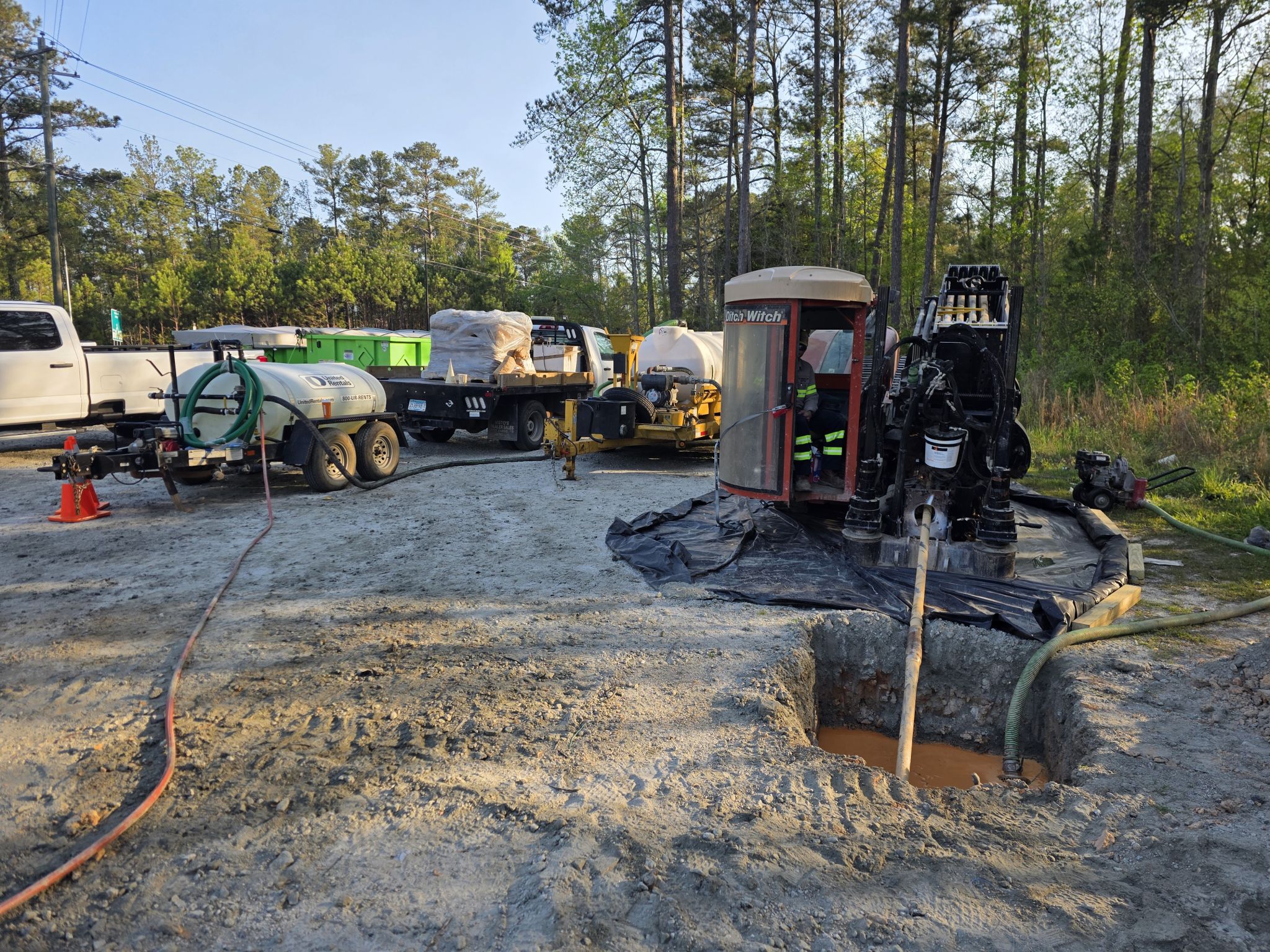
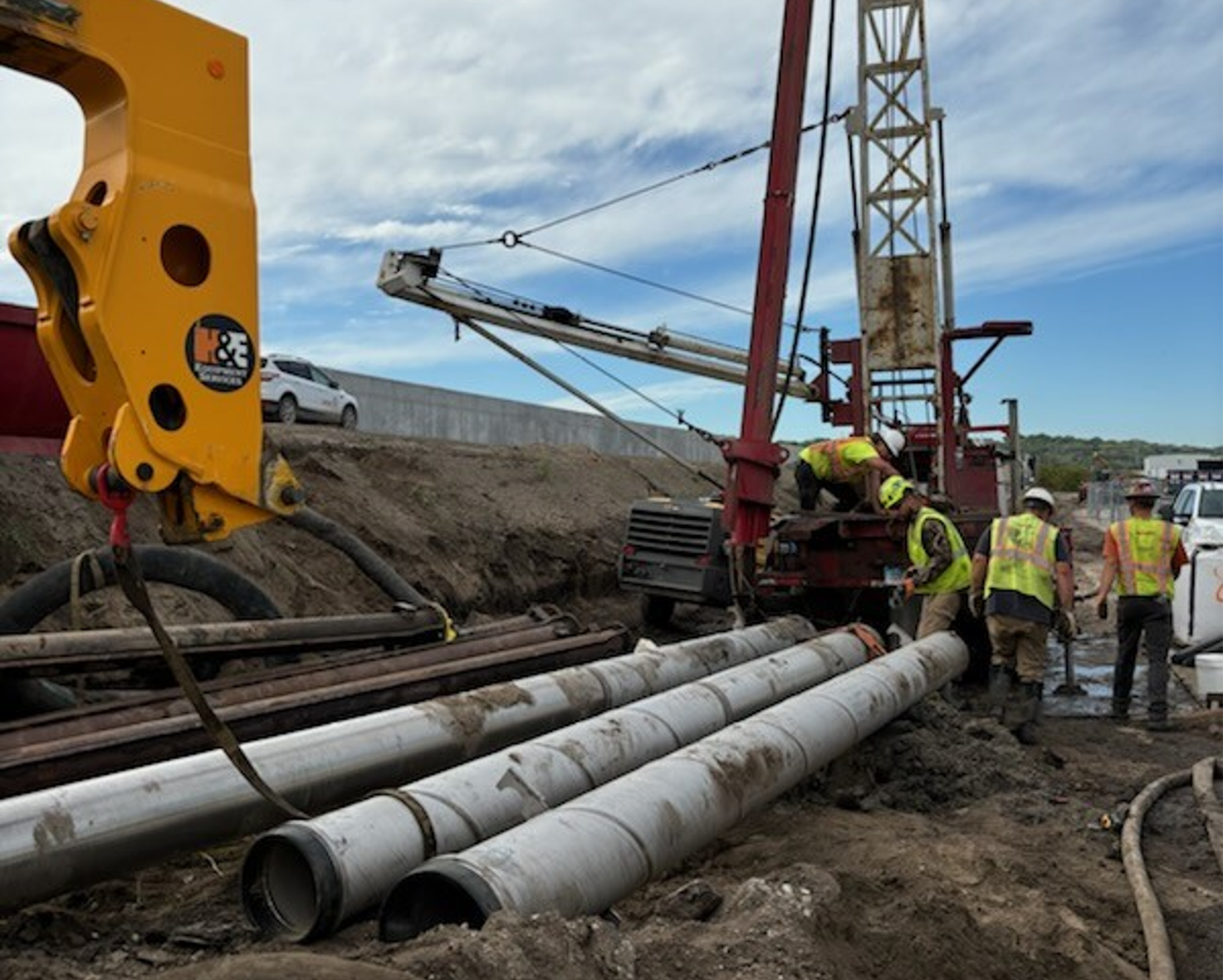
On both the north and south sides of the future underpass, drainage was installed to prepare the access ramps. On the north side, drains were machine-milled to around four metres deep. On the south side, where the corridor lies deeper due to the sloping embankment of the A59, drains up to six metres deep were installed. Twenty-five drain strings were laid on each side, closely spaced and set to the exact depth required for the dewatering target.
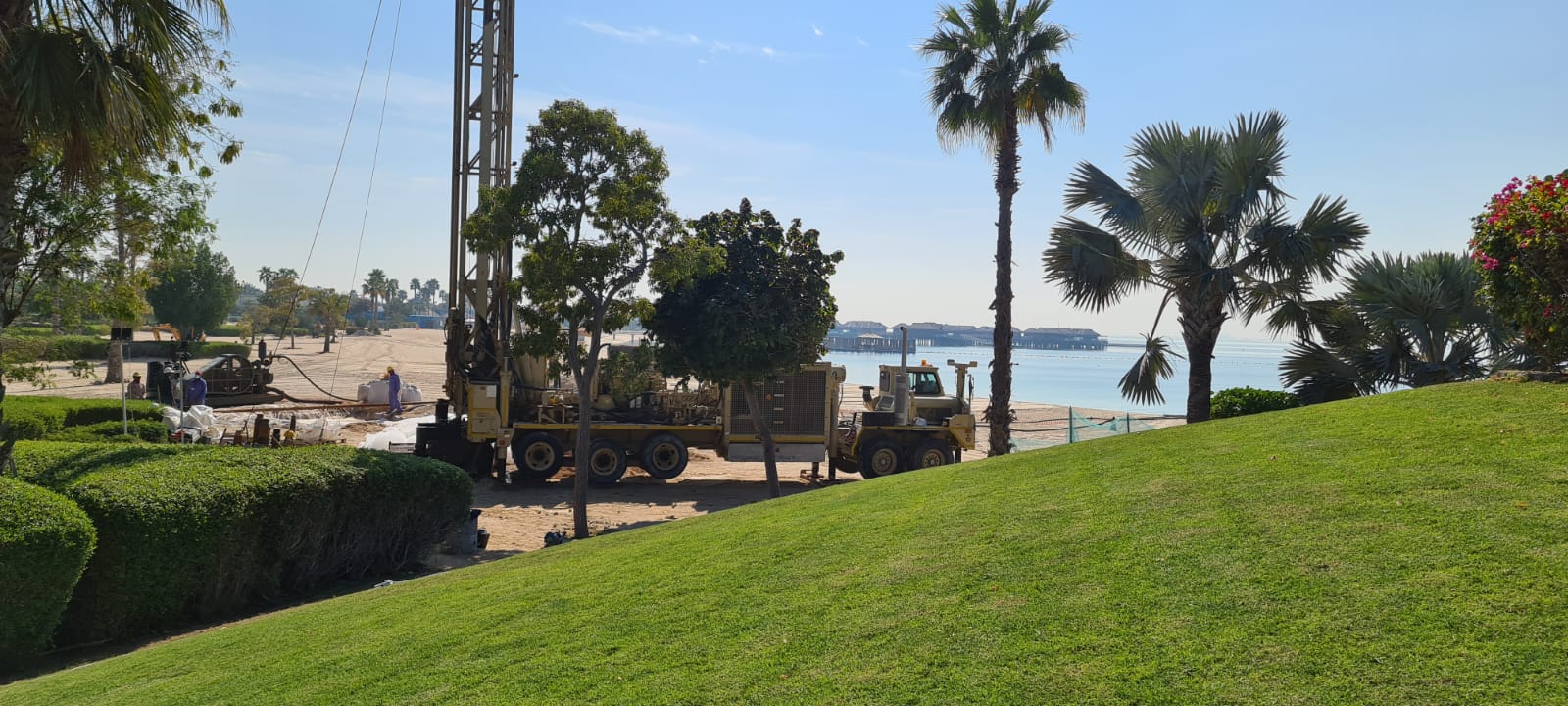
Four additional deep wells were sunk into the A59 embankment itself, to keep the tunnel section dry once the underpass is in place, whatever the groundwater conditions turn out to be.
A Trial Run Before the Closure
To avoid surprises during the nine-day closure, an extensive test-pumping exercise was carried out a week beforehand. Using a trial dewatering setup, monitoring wells and data loggers, the team confirmed that the calculated groundwater lowering would actually be achieved before the motorway closed.
A Large-Scale Return System
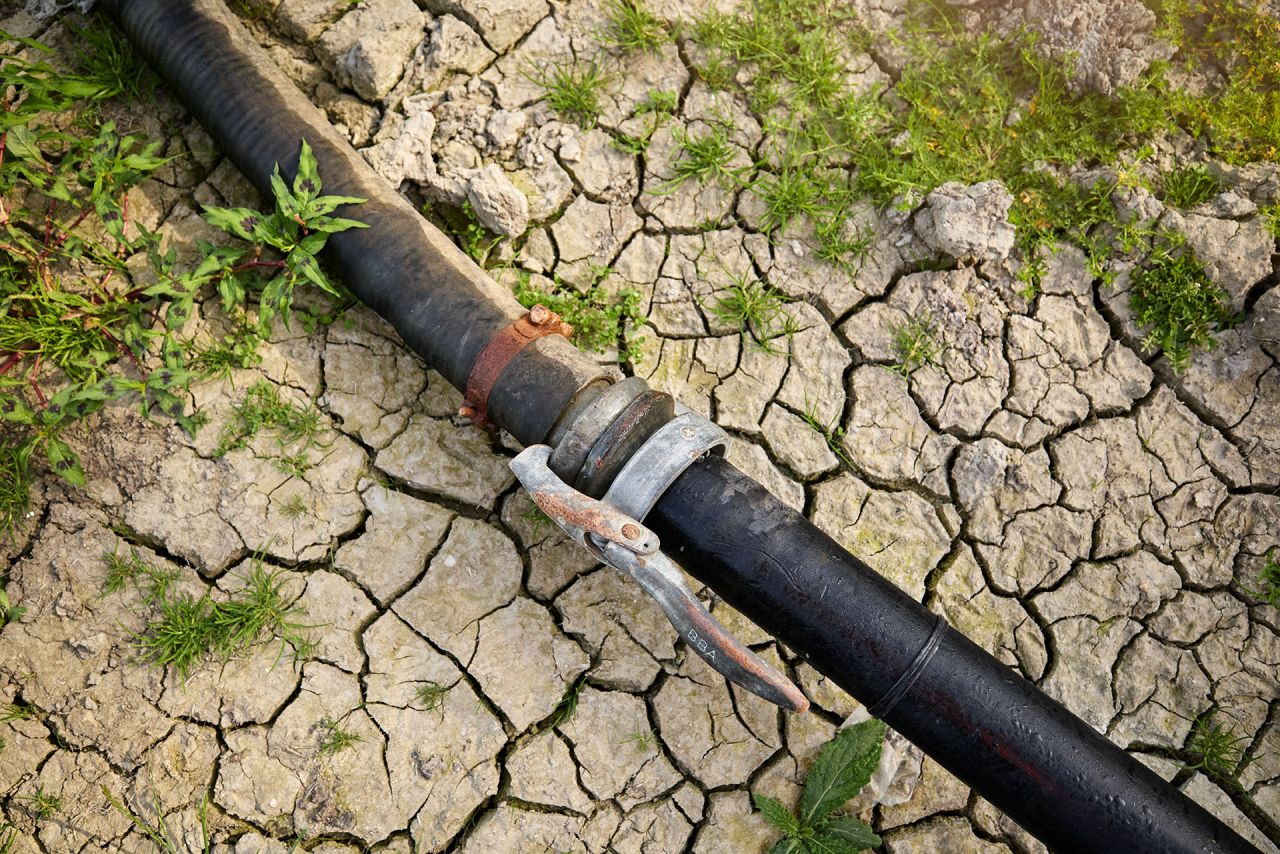
The dewatering system runs for around forty weeks in total and handles substantial volumes of water: roughly 250 m³ per hour on the north side and 450 m³ per hour on the south side. During the insertion operation itself, another 400 m³ per hour of deep well dewatering is added, bringing the permitted maximum to 1,050 m³ per hour.
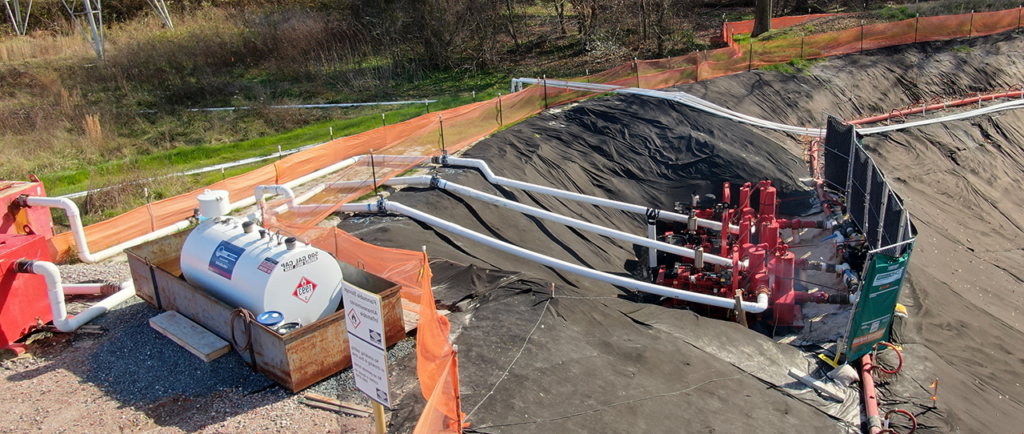
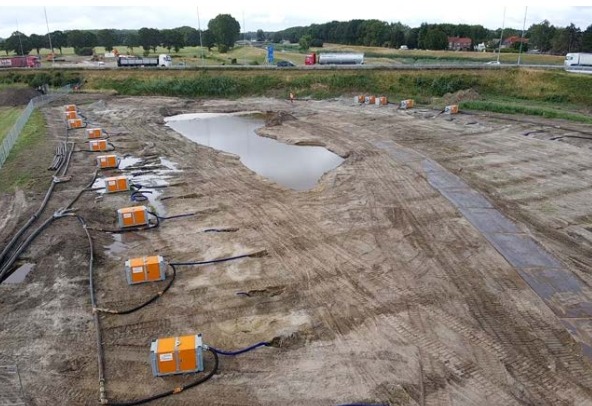
A large share of the extracted water is returned to the ground rather than discharged. On the south side, a return field of around forty return wells has been built, divided into three separate sections.
Continuous Monitoring
Groundwater levels in the construction pit, the return field and the surrounding area are tracked continuously through fourteen monitoring wells. The groundwater level is not allowed to rise more than 30 cm below the mowing line, and currently sits around 50 cm below it, leaving only 20 cm of margin before it triggers an alert. Early warnings and alarms allow the team to step in immediately if needed. Overflow facilities have also been built towards nearby watercourses, with the Drongelens Canal available as a last resort if no other option remains.
A carefully designed dewatering concept, extensive test measurements and continuous monitoring have the construction site fully prepared for the nine-day operation.
With this preparation in place, the underpass can be slid into position beneath the A59 on schedule, and the motorway can reopen on time.
Source: GWW Bouwmat / Civil Engineering. Text: Roel van Gils. Images: Bronbemaling.com.