Water Supply Wells for Luxury Off-shore Island
How Hydroserv International delivered specialist water mitigation solutions for a 5-star luxury resort under complex site conditions
Banana Island Resort is a five-star destination off the Eastern Coast of Qatar. Based on extensive experience, Hydroserv International were called upon for an immediate and technically demanding drilling solution. In doing so, they delivered their most operationally complex and logistically challenging well-drilling projects to date.
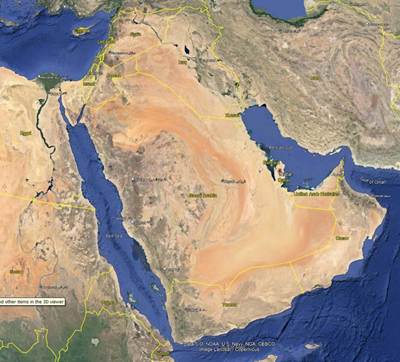
Above: Location of Banana Island off the Eastern Coast of Qatar, showing borehole positions BW-01 to BW-04
The Solution
Hydroserv International’s solution was clear: new, deep production wells were needed to bypass and isolate the Dammam aquifer to a depth of 35 metres, tapping instead into the deeper, Rus aquifer. The technical solution was sound. The execution, however, presented a formidable set of obstacles.
The island has no dock capable of receiving large drilling plant. Temporary water supply would be needed during the drilling period. The resort’s high-end guests could not be disturbed and the window before VIP arrivals was closing fast.
Phase 1: Getting on the Island
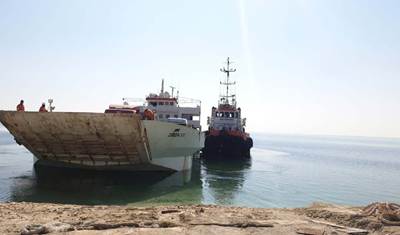
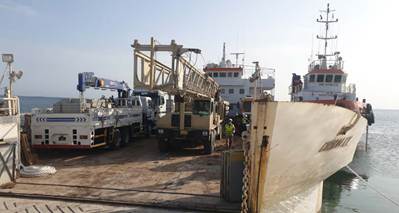
The first challenge was simply getting the equipment ashore. With no conventional berth for heavy plant, Hydroserv engineered a controlled beach-landing operation using a Landing Craft Tank (LCT) for roll-on/roll-off delivery. Tidal windows were carefully planned, ground protection matting was laid across sensitive areas, and coordinated convoys moved rigs, casing, and pumps through the resort’s constrained accessways with the smallest possible footprint.
Landing craft positioning at Banana Island to deliver rigs and materials | Rig staged on jetty for rapid deployment across constrained resort accessways |
Ramp-down: LCT beached to offload rig and critical equipment directly to the work front | Departure after completed delivery — strict timing to match tide and guest-activity windows |
Phase 2: Keeping the Resort Running
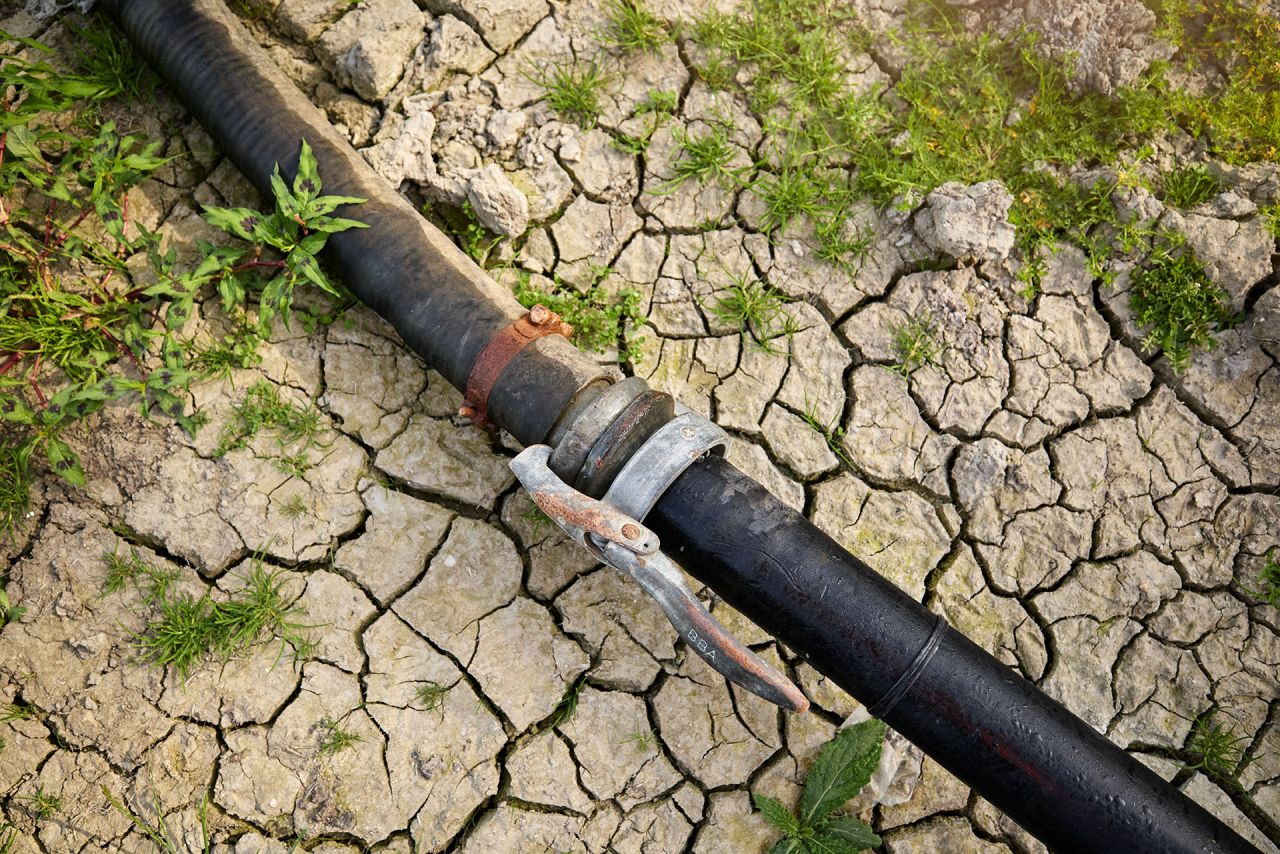
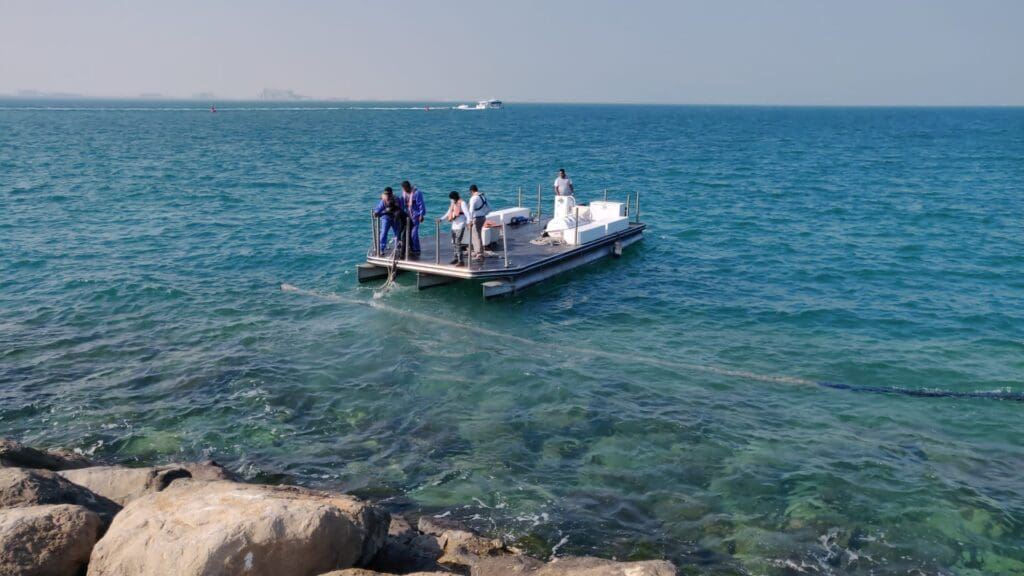
While the drilling programme was being mobilised, the resort still needed water. To bridge the gap, Hydroserv rapidly deployed a modular platform and laid a temporary seawater intake across the nearshore reef into deep offshore water. The system was operational within days, delivering a water supply during the drilling period.
Above: Modular platform laying the temporary deep sea intake to feed the RO plant
Phase 3: Working Invisibly in a 5-Star Resort
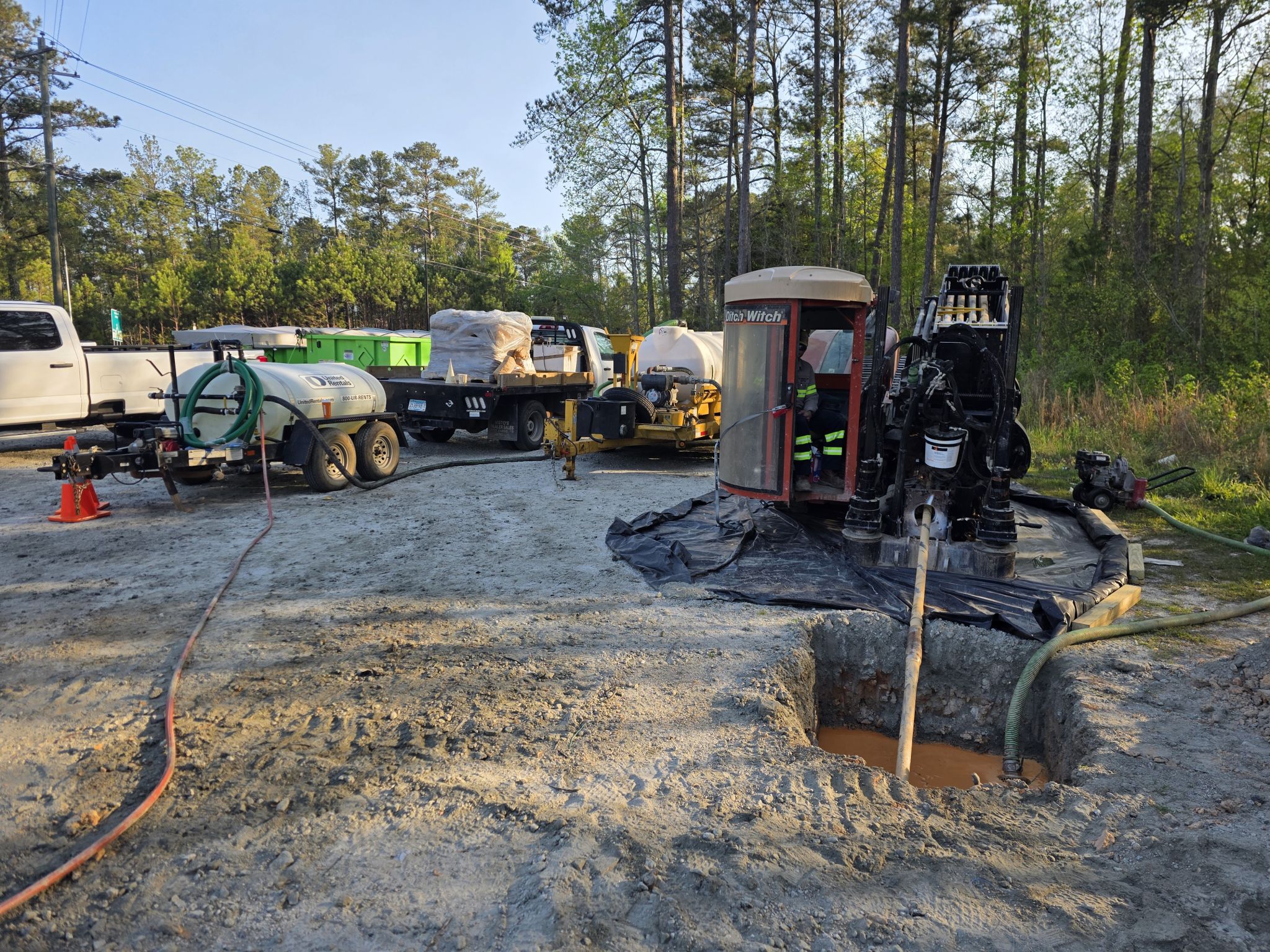
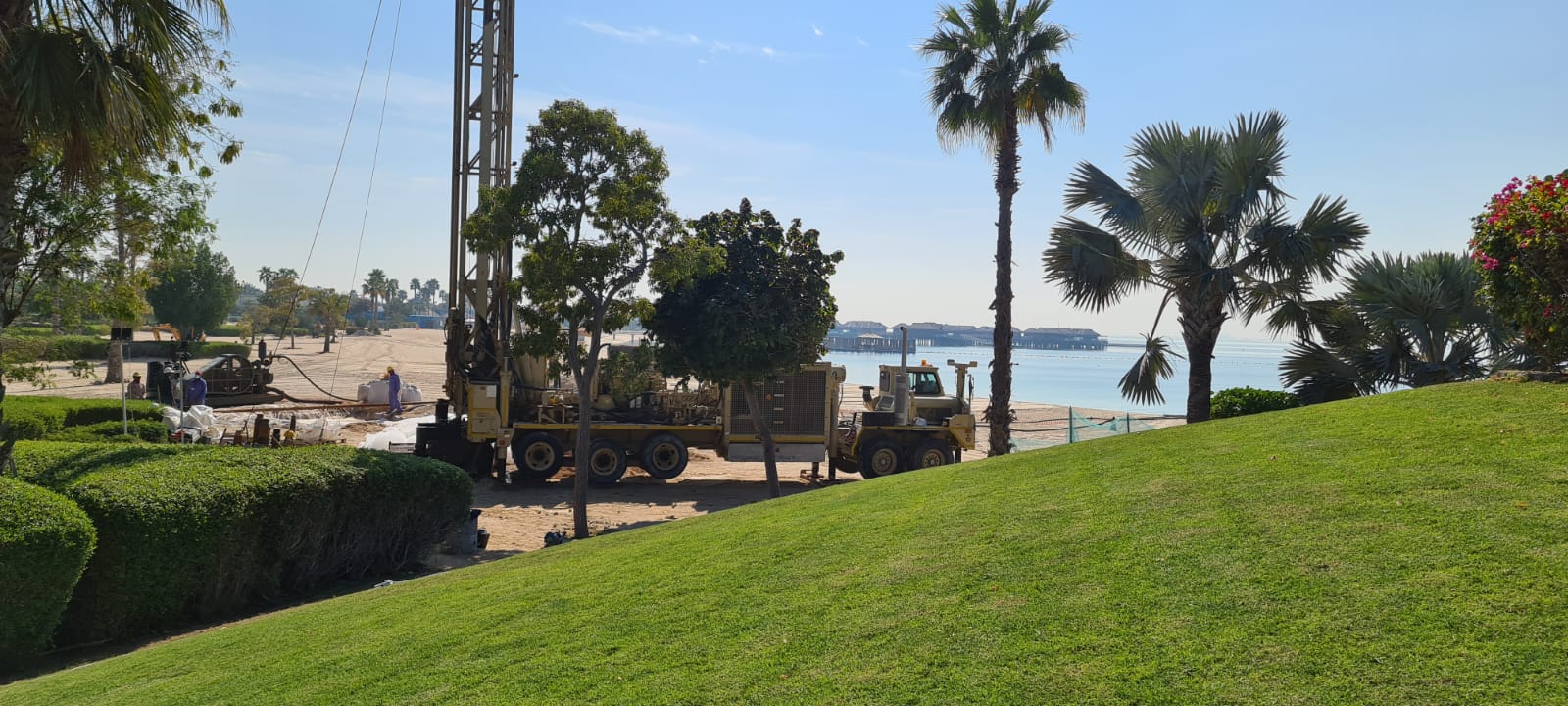
Perhaps the most operationally demanding aspect of the project was not the drilling itself but doing it without guests ever knowing it was happening. Hydroserv International implemented a comprehensive zero-disruption protocol: drilling and movement activities were restricted to night and early-morning windows; sound attenuation measures were in place throughout; all fencing was discreet; temporary pipelines were camouflaged; and every beach interface was fully protected and restored at the end of each working day.
Above: Drilling rig deployed within the resort grounds — zero-disruption protocols maintained throughout
The Technical Solution: Deep Wells for Source Isolation
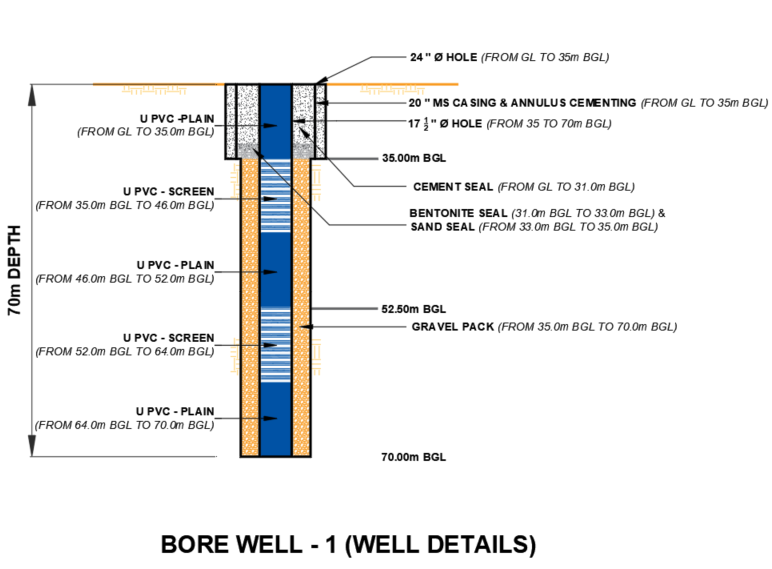
The four production wells were each drilled to approximately 70 metres total depth, with steel casing and cement placed to ~35 metres to permanently isolate the shallow groundwater zone and protect the integrity of the deeper water source. The lower intervals were screened into the clean Rus aquifer, completed with a filter pack, and subjected to full performance testing. Dedicated motor control centres (MCCs), remote start/stop commands, and dual feed lines connected each well directly to the RO plant.
Above: Deep well design schematic — isolating shallow contaminated aquifers to ~35m BGL
A Rapid, Parallel-Path Programme
The entire operation was executed on a tightly managed, parallel-path programme designed to protect the schedule while keeping the resort fully operational at every stage.
| Phase | Key Activities | Duration |
| Mobilize | Permits, vessel booking, protection mats, modular platform | Days 1–5 |
| Stabilize Supply | Lay temporary deep-sea intake, connect to RO feed | Days 4–10 |
| Drill & Complete Wells | Four wells (~70m TD), isolation to ~35m, testing | Days 7–35 |
| Integrate & Optimize | Dual pipelines to plant; controls, commissioning | Days 20–40 |
“All works were completed safely, on programme, and with minimal visual and audible footprint – prior to key VIP visits.”
From the Site
Results & Impact
The project was successfully completed with the following key achievements:
Borehole drilling: Successfully drilled four boreholes (BH-1, BH-2, BH-3, and BH-4), each to a depth of ~70 m. Each borehole was proven capable of delivering the required discharge rate of 60 m³/hr of suitable groundwater, meeting project requirements.
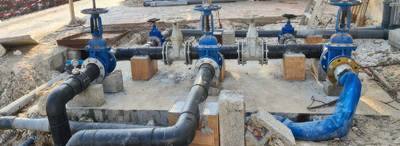
Pipeline installation: Installed dedicated pipe lines from each borehole to the RO plant. Two pipelines were laid from each well, equipped with gate valves and NRVs, and discreetly concealed from view.
Hydrogeological validation: Transmissivity and storativity assessments confirmed that the underlying Rus aquifer provides sufficient yield to sustain the required flow rate (60 m³/hr per well).
Seamless execution: All activities were completed with minimal disruption to the luxury holiday island, even during peak season with high-profile guests including prime ministers, the Emir, and other dignitaries.