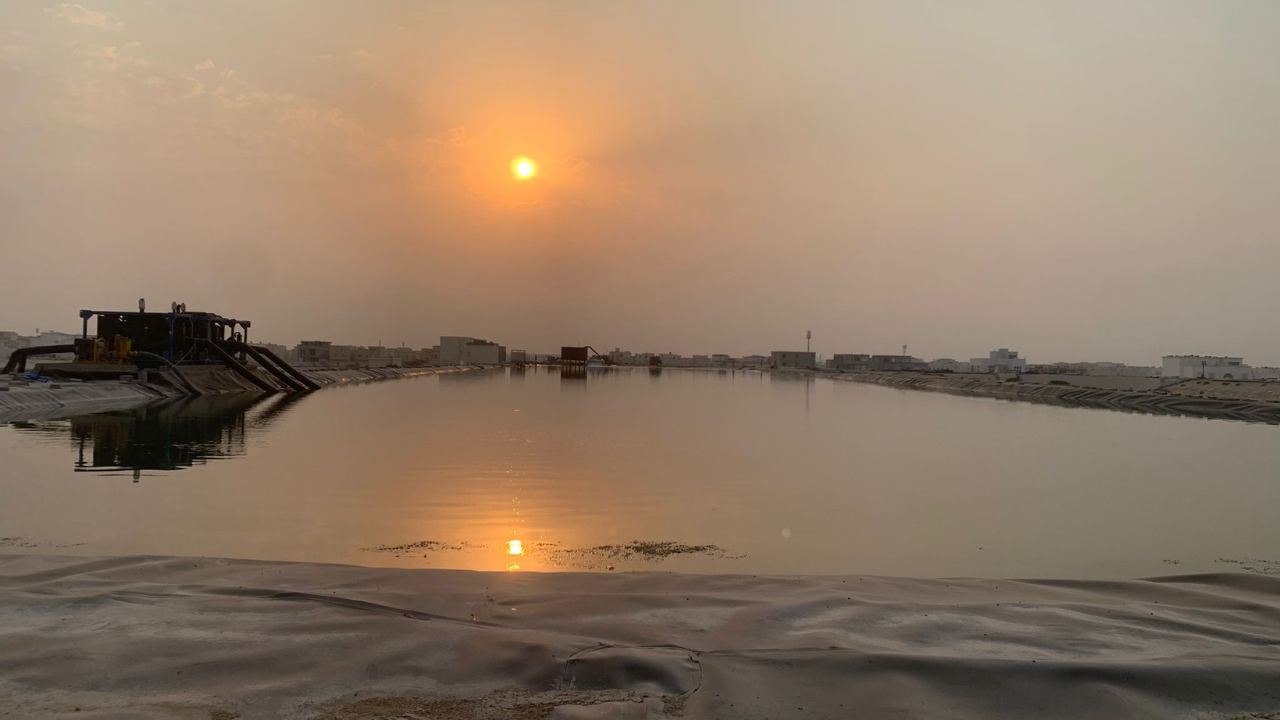
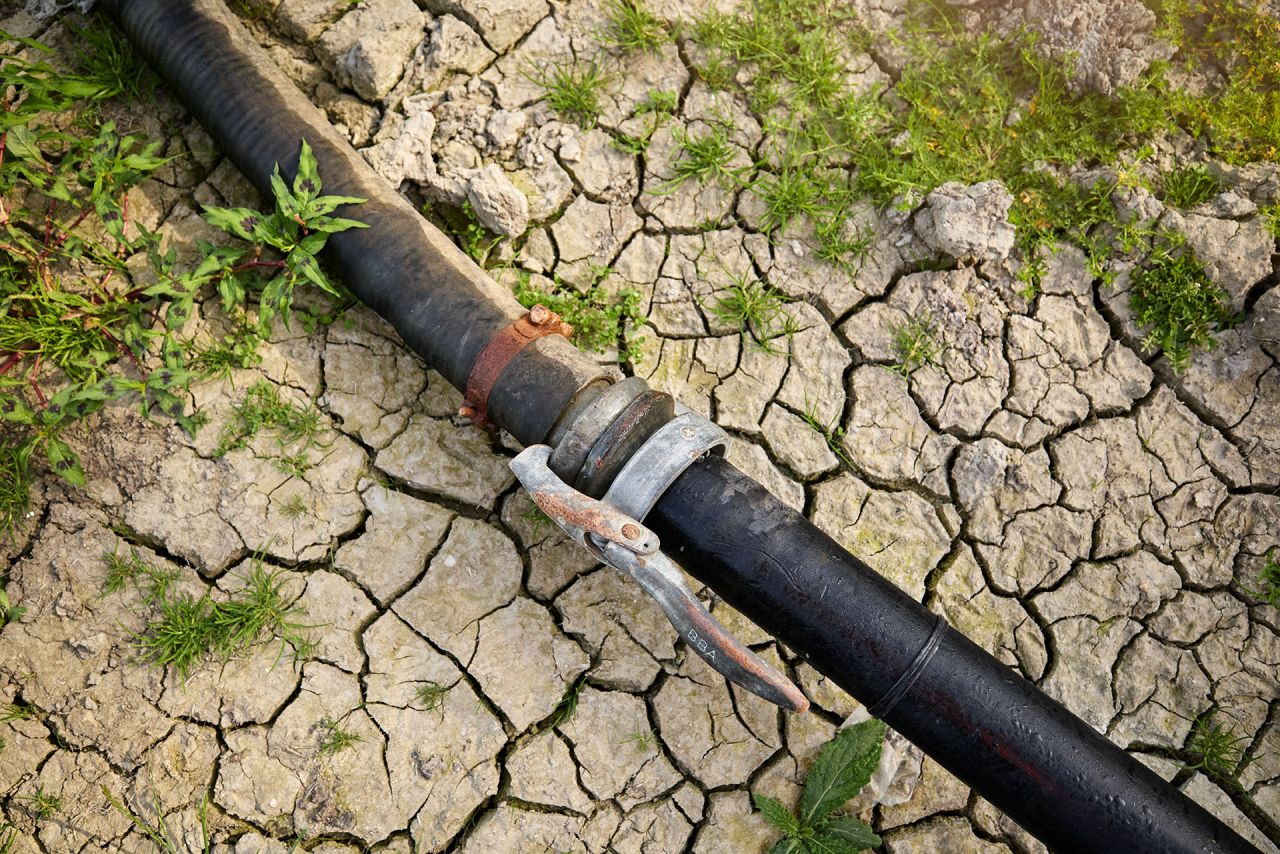
Dutch summers are changing. Longer dry spells, higher temperatures, and increasingly extreme rainfall in shorter bursts are becoming the norm. While these shifts are visible above ground — from dried-out ditches to yellowing verges — equally important processes are taking place beneath the surface, with real consequences for the built environment and the construction sector.
For developers, contractors, government bodies, and engineering firms, this means the subsurface is becoming less predictable. The effects of climate change don’t stop at ground level.
New Challenges During Drought
A prolonged low groundwater level can, in some cases, be an advantage for construction projects — a smaller groundwater drawdown may be needed, or dewatering may not be required at all, reducing both execution risk and impact on the surrounding area.
At the same time, drought brings new challenges of its own. In areas sensitive to settlement, a structurally lower groundwater level can contribute to land subsidence and damage to surrounding structures. Pressure on available freshwater reserves also increases when groundwater isn’t sufficiently replenished over time — affecting not just construction, but nature, agriculture, and ultimately drinking water availability.
This is exactly why responsible groundwater management matters more than ever — not just during construction, but as part of a broader strategy for careful stewardship of our underground water resources.
The Role of Dewatering in a Changing Climate
Dewatering has traditionally been seen as a technical solution to keep a construction pit dry and safe to work in. But the task is evolving. It’s no longer just about keeping a site dry — it’s about responsibly managing the groundwater around a project.
How do we control the groundwater balance and contribute intelligently to a climate-resilient water system?
Below are five ways heat and drought affect the groundwater system, and why sustainable water management is becoming increasingly important.
1. Increased Evaporation Disrupts the Natural Groundwater Balance
During a heatwave, more happens than a simple rise in air temperature. Evaporation from soil, surface water, and vegetation increases sharply, while high-pressure systems typically suppress cloud formation and rainfall. The natural water cycle falls out of balance — more water leaves the ground and vegetation than rainfall replaces.
This directly affects the groundwater balance. Rainfall that would normally infiltrate the soil and recharge groundwater doesn’t arrive, causing a rainfall deficit and falling groundwater levels — particularly in shallow aquifers. The longer this continues, the more the available groundwater supply shrinks. How quickly this happens depends heavily on soil composition: sandy soils tend to respond fairly quickly to prolonged drought, while clay and peat areas respond more slowly due to their water-retaining properties.
For construction projects, this means groundwater conditions during execution can look very different from what was assumed at the design stage.
2. A Lower Groundwater Level Doesn’t Automatically Mean Lower Risk
It’s a common assumption that a low groundwater level is favourable for dewatering, since less drawdown is needed. In reality, it’s more nuanced.
A lower starting groundwater level can indeed mean a smaller required drawdown. But a prolonged dry period can also change the properties of the subsurface and increase the surrounding area’s sensitivity. Designing a dewatering scheme involves several factors:
- Soil composition and permeability
- The presence of water-bearing and confining layers
- The required excavation depth
- The duration of the works
- Distance to vulnerable structures
- Impact on the surrounding environment
A dewatering challenge isn’t just about how much water needs to be extracted — it’s about what happens to the groundwater system once you intervene.
3. Drought Increases Focus on Settlement and Environmental Risk
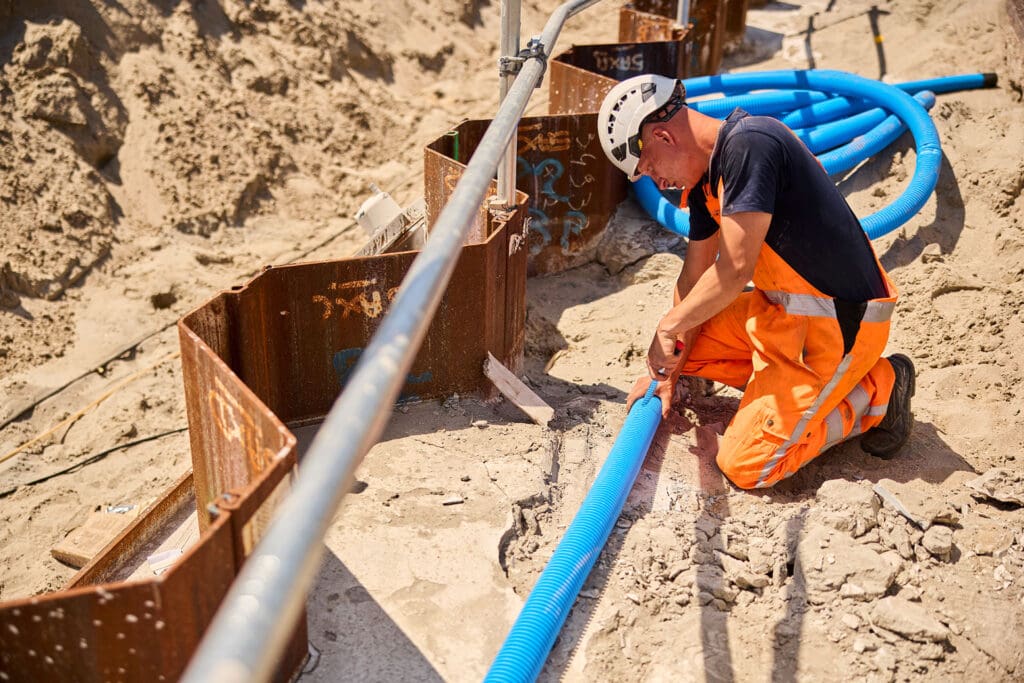
One of the key concerns during prolonged drought is how the soil behaves. In areas with peat and compressible clay layers, a falling groundwater level can cause soil volume changes. When groundwater stays below its usual level for an extended period, soil layers can compact — with consequences for existing buildings, infrastructure, and underground utilities.
Temporary dewatering generally doesn’t cause a lasting drop in groundwater levels; the system typically recovers afterwards. Still, dewatering during periods of sustained drought calls for extra care. In locations where groundwater levels are already critically low, scarcer freshwater is being extracted. In areas affected by salinisation, this can also influence the balance between fresh and brackish groundwater.
For higher-risk locations, it’s important to understand in advance:
- Soil composition
- Sensitivity to settlement
- Existing structures
- Natural groundwater fluctuations
- Availability of freshwater
- The expected impact of the dewatering works
Monitoring plays an increasingly important role here — not just to record what happened after the fact, but to enable dynamic adjustments and more careful groundwater management as work progresses.
4. From Drought to Downpour: Extremes Demand Flexible Water Management
Climate change isn’t just producing longer dry spells — short bursts of extreme rainfall are also becoming more frequent. This combination makes the subsurface more dynamic. A construction project isn’t only affected by rain or drought at the project location itself; local conditions are closely tied to the broader water system. While local rainfall affects the soil, groundwater levels are also strongly influenced by river discharge, water level management, and regional water governance.
During periods of high river discharge, the groundwater system can be gradually replenished through infiltration and regional waterways — which is why increasing focus is being placed on water retention measures. During prolonged drought and low river discharge, the reverse can happen: rivers can draw groundwater from the surrounding area, causing levels to fall further.
For dewatering projects, this means local weather conditions aren’t the only factor — regional hydrological dynamics matter too. A well-designed dewatering scheme accounts for both local soil composition and how the broader water system functions.
This reflects a shift in the traditional thinking behind dewatering:
From: Extract water → keep the pit dry → discharge water. To: Manage water → protect the surroundings → return groundwater (treated if needed) or retain it.
This positions dewatering as part of a broader, climate-adaptive approach.
5. Monitoring Is the Foundation of Reliable Groundwater Management
As conditions change more rapidly, having clear insight becomes increasingly important. Continuous monitoring allows changes in groundwater levels, flow rates, and environmental impact to be identified early — creating room to act before risks materialise.
Monitoring gives clients, contractors, and authorities better oversight of:
- Dewatering system behaviour
- The impact of the dewatering works
- Protection of the surrounding environment
- Compliance with permit conditions
- Reducing execution risk
In a changing climate, monitoring is no longer just a technical requirement — it’s an essential tool for sustainable construction.
From Dewatering to Sustainable Groundwater Management
These climate and water trends call for a broader view of dewatering. Groundwater is no longer just something to be temporarily removed to make construction possible — for too long it’s been treated as a by-product, when in fact it’s a valuable resource that needs careful management. The sector is shifting from extraction and disposal towards control and return.
Infiltration as Part of Future-Ready Construction
When groundwater is extracted for a construction project, it’s often desirable to return it to the ground in a controlled way. This limits the dewatering’s impact on the surrounding area and helps preserve the local groundwater balance. Return infiltration is an important part of future-ready construction.
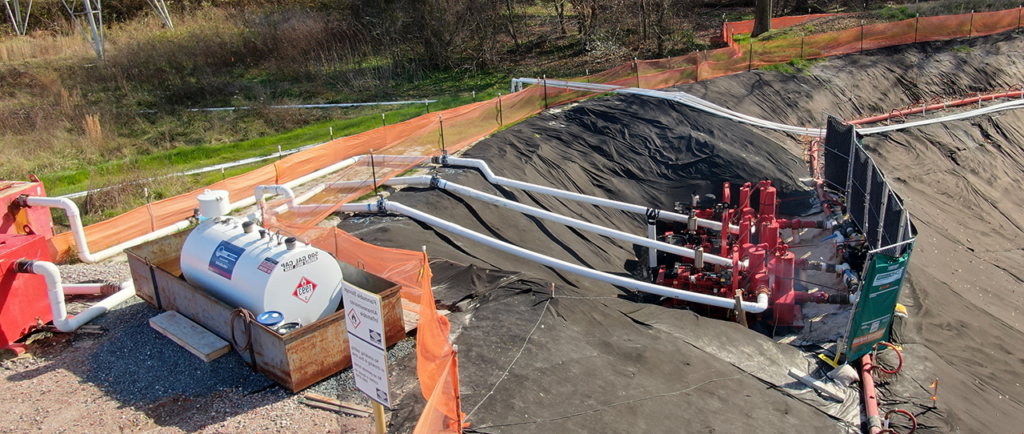
Infiltration techniques such as DSI®/FHVI allow water to be returned directly into suitable water-bearing layers. With this deep infiltration method, water is injected at greater depth into an aquifer, where it can disperse in a controlled way — particularly useful for projects where the surrounding area is sensitive to groundwater drawdown, or where space is limited or a specific spread of water is required.
In urban settings, systems such as the ‘Schelpenbron’ (shell-well) infiltration system can also be a suitable solution — not for construction dewatering itself, but as part of permanent local rainwater management, storing, purifying, and infiltrating rainwater beneath roads, car parks, and even buildings. The right technique always depends on the local situation: soil composition, groundwater flow, surrounding environment, and project objectives.
The Future: Building with Respect for the Subsurface
As this article shows, the effects of a heatwave don’t stop at ground level. Real changes take place below the surface that can shape the feasibility and risk profile of construction projects. Drought, extreme rainfall, and shifting groundwater levels all point to the same conclusion: water management is becoming an integral part of future-ready construction.
The question is no longer just:
“How do we keep a construction pit dry?”
But increasingly:
“How do we deliver a construction project that manages the groundwater system responsibly?”
That shift calls for subsurface knowledge, smart techniques, and an integrated approach where dewatering, infiltration, and monitoring come together. Because sustainable construction doesn’t start only with what we build above ground — it starts with how we manage what happens beneath it.
Original article (Dutch): bronbemaling.com/kennis/hittegolf-boven-de-grond-uitdagingen-onder-de-grond