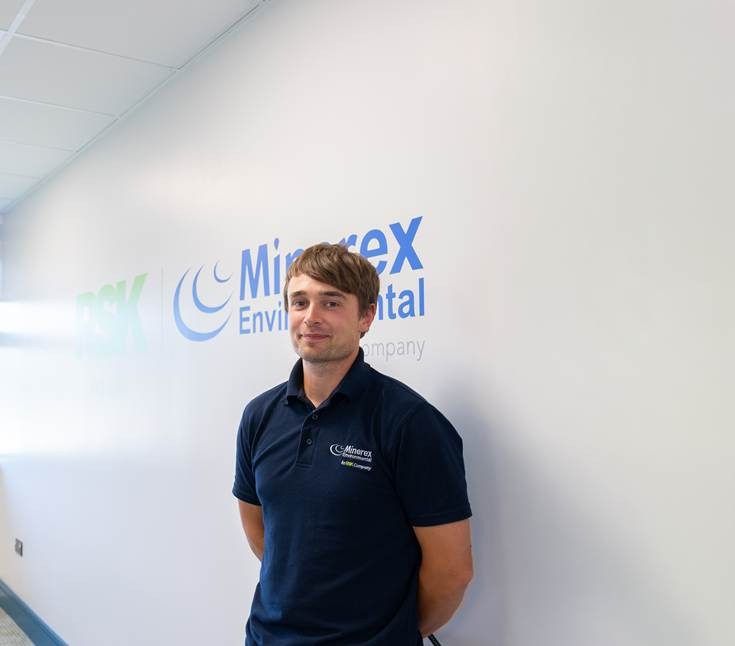
The Dewatering Institute (TDI) proudly spotlights outstanding professionals in the dewatering and groundwater engineering field through its monthly interview series. This edition features Carson Morrow, associate director and dewatering manager at Minerex Environmental Limited.
Carson holds a BSc in Agricultural Science from Dublin Institute of Technology (Ireland) and an MSc in Applied Environmental Science from University College Dublin (Ireland). He joined Minerex Environmental in 2022 after completing his Master’s degree and was initially mentored by Cecil Shine, Technical Director and Founder of Minerex Environmental. Under Cecil’s guidance, he gained valuable advice, support, and practical experience in construction dewatering and groundwater control.
He has since progressed rapidly to his current role as Associate Director and Dewatering Manager achieving this position before the age of 30 and has led some of Ireland’s most complex groundwater control and water treatment projects.
What stage are you at in your career right now?
I am currently an Associate Director at Minerex Environmental.
What led you to the dewatering field, and what motivated your choice?
Growing up on a farm, the environment was always hugely important to me. I studied Agricultural Science and, after a summer building percolation systems, realised I wanted to move further into the environmental field, with the long-term goal of working in environmental policy.
I then completed a Master’s degree in Environmental Science at UCD. Around that time, I received a late-night email from Cecil Shine. The following morning we had an hour-long Teams call where he asked me how many centimetres were in an inch and whether I knew how a pump worked, the rest is history.
Cecil’s passion, knowledge, and willingness to teach, combined with the opportunity to work closely with someone of his calibre, made the decision an easy one.
My background in mechanics and farming, paired with my environmental training, turned out to be the perfect foundation for a career in dewatering.
Have any projects been instrumental in launching your career?
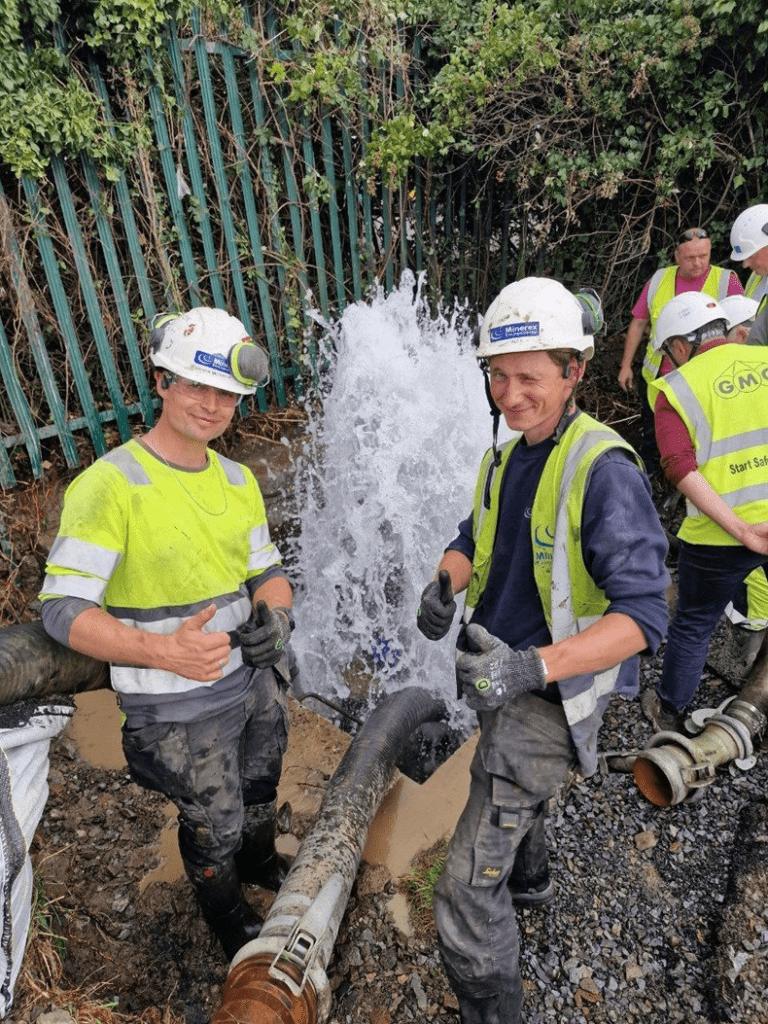
My first project was on a site in Dublin. We were working 10 metres below ground level, pumping 27 L/s directly to the River Liffey, and the site management situation was extremely challenging. To get the job done, Cecil, our engineering lead Sean, and I were literally carrying buckets of stone by hand and digging trenches ourselves to stop water mixing with fresh concrete and keep the site dry.
To this day, it remains one of the hardest but also one of the most enjoyable projects I’ve worked on.
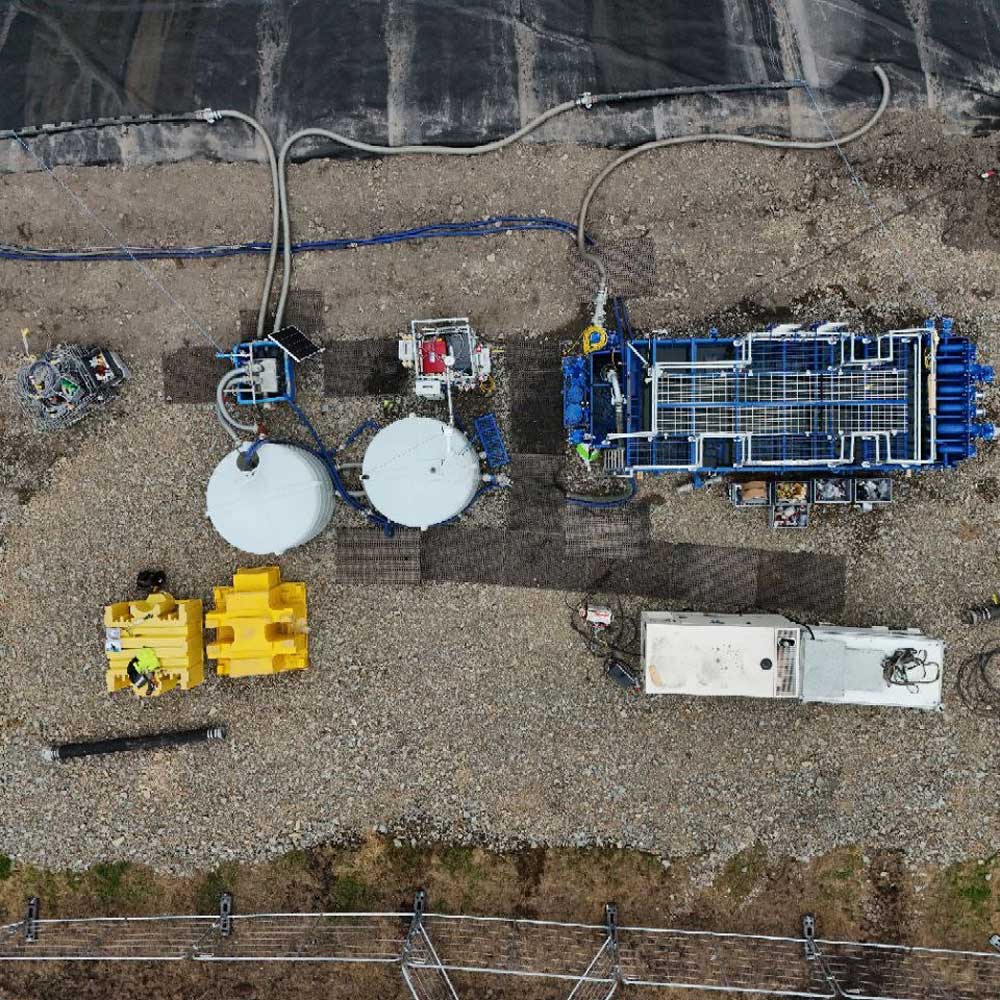
Another project that was hugely instrumental in my career was our largest project, where I was the onsite manager for almost two years. Under Cecil’s and Pat’s guidance, we were treating water contaminated with hydrocarbons at flows of up to 30 L/s.
The challenge on this project was that the base flow was only 4–5 L/s, but the system needed to automatically increase capacity to 30 L/s at any time, day or night. Managing this site taught me invaluable lessons in site management, dealing with high-pressure environments, and working with client expectations. The project eventually continued for another two years as an end-state treatment system, with Craig, who had originally supported me on the project later stepping into the role of onsite manager himself.
What do you predict will be the most significant challenges for the industry in the future?
In my view, one of the most significant challenges for the industry is how dewatering is perceived by clients and the construction industry.
Many contractors still choose to take the risk themselves rather than engage a specialist dewatering and water treatment company. This not only dilutes the standing of the industry but also creates significant environmental risks when non-compliant water is discharged.
It is important that the industry takes a proactive role in addressing this by engaging with policymakers and ensuring clients understand the necessity of specialist dewatering systems whenever groundwater, and often surface water, is encountered on a project.
Another challenge is maintaining a skilled workforce. Dewatering is not currently recognised as a defined trade, which makes recruiting the right people difficult. I have been incredibly fortunate to build the team we have today, but unless the industry positions itself alongside trades such as electricians or concrete specialists, attracting and maintaining a well-trained workforce will remain a challenge.
In what ways do you envision technology influencing the industry in the coming years?
Technology has always been central to the industries I’ve worked in. Farming is an incredibly technology-driven industry, and dewatering should be no different.
Minerex is a strong advocate for automation, monitoring, and technological development. The more monitoring and automation a site has, the fewer failures and compliance issues we will see.
At Minerex we are constantly developing and improving our systems. While we haven’t moved heavily into AI yet, I can see it eventually acting as an intelligent monitoring system, potentially replacing some weekend or night-time site checks.
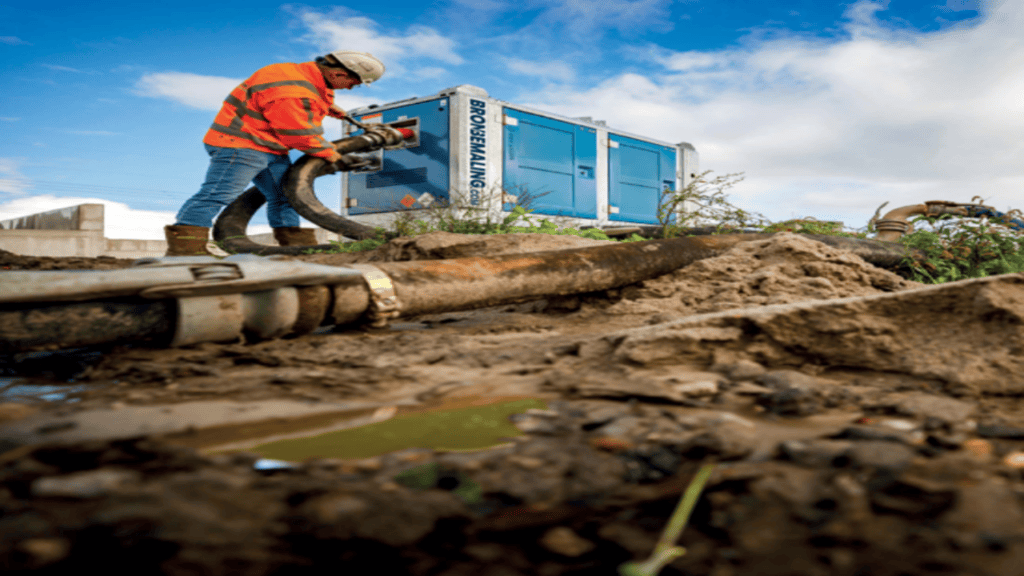
Currently, we can control every pump on our sites remotely, we design and build our own tanks and treatment vessels, and we develop our own remote monitoring and control units. Every site is equipped with full 24/7 monitoring and automation.
For us, technology is the second most important component of the system after the pumps themselves.
What elements of the industry do you believe require improving?
One area that requires improvement is the implementation and enforcement of legislation.
In Ireland, the legislation itself is generally strong, but local authorities and Irish Water are often under-resourced. This means ensuring construction sites remain within discharge parameters can be extremely difficult.
On some of our sites, there are no samples taken by regulators and no site inspections carried out. Because we provide the treatment service, it can sometimes be difficult to effectively self-regulate when a client does not fully respect the environmental obligations involved.
Stronger enforcement would significantly improve compliance and help eliminate the practice of contractors attempting to carry out substandard dewatering or water treatment systems themselves.
Why do you think TDI is important for the industry and how can it help the industry develop?
I believe TDI will play a vital role in ensuring that professional dewatering is recognised as essential whenever projects require groundwater control.
Equally important is the role TDI plays in bringing the dewatering community together. It creates a platform where knowledge, experience, and best practices can be shared, ultimately strengthening the entire industry.
Many industries are far less collaborative, and organisations like TDI help maintain that sense of shared progress.
Ultimately, who stands as your most enthusiastic advocate?
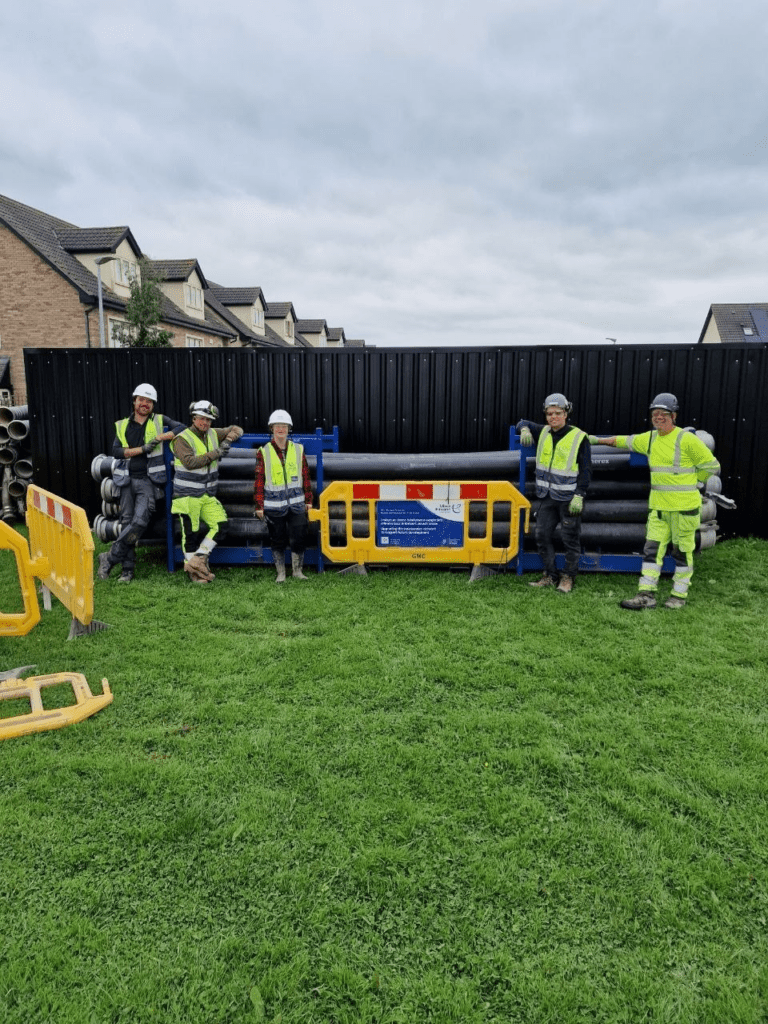
I am lucky to say that I have more than one and the team at Minerex both past and present, deserve strong recognition. I’m fortunate to work with a dewatering team who give everything every day to ensure our sites remain dry, safe, and compliant. They are the boots on the ground, but they are also highly innovative and extraordinarily resilient when faced with the challenges that complex sites can present.
Alongside them, we have a dedicated engineering team, a science team, a DLA team, a health and safety team, and a strong administrative team. Collectively, the quality of their work, their responsiveness, and their commitment are fundamental to the high standard at which Minerex operates.
On a personal level, my girlfriend Martha deserves a special mention. From 2 a.m. emergency calls, many missed date nights and a limited work life balance, she has consistently supported me and listened when I need to talk through challenges. At this stage, with the amount she hears about pumps and treatment systems, she could join the industry herself.
What is your life motto?
I don’t have a single life motto, but my mum raised me with a strong work ethic and a mindset of figuring things out.
Growing up on a farm, she encouraged me to take things apart, rebuild them, and learn through mistakes. That early experience taught me resilience and problem-solving, and it still gives me the confidence to face new challenges and make decisions today.