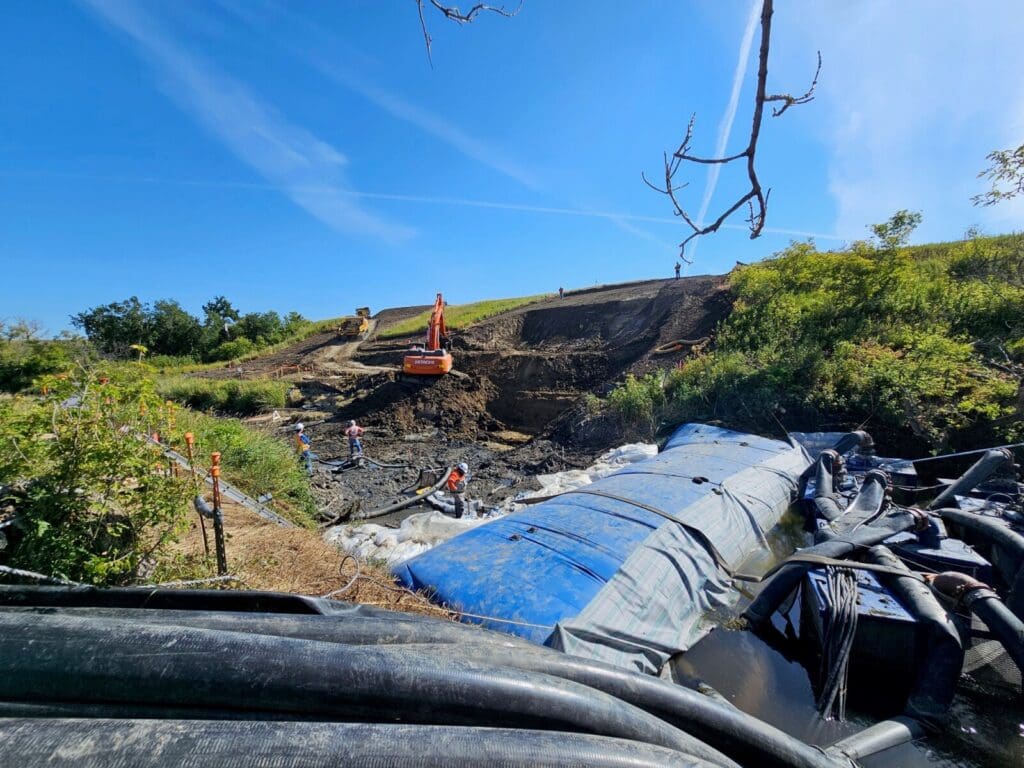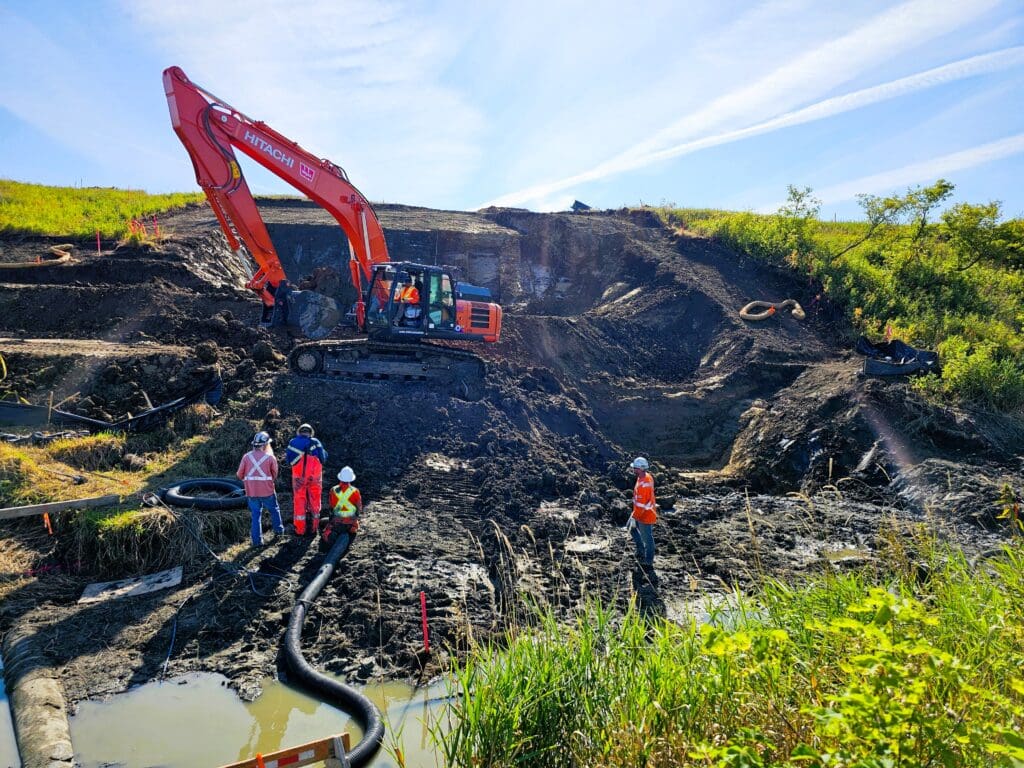
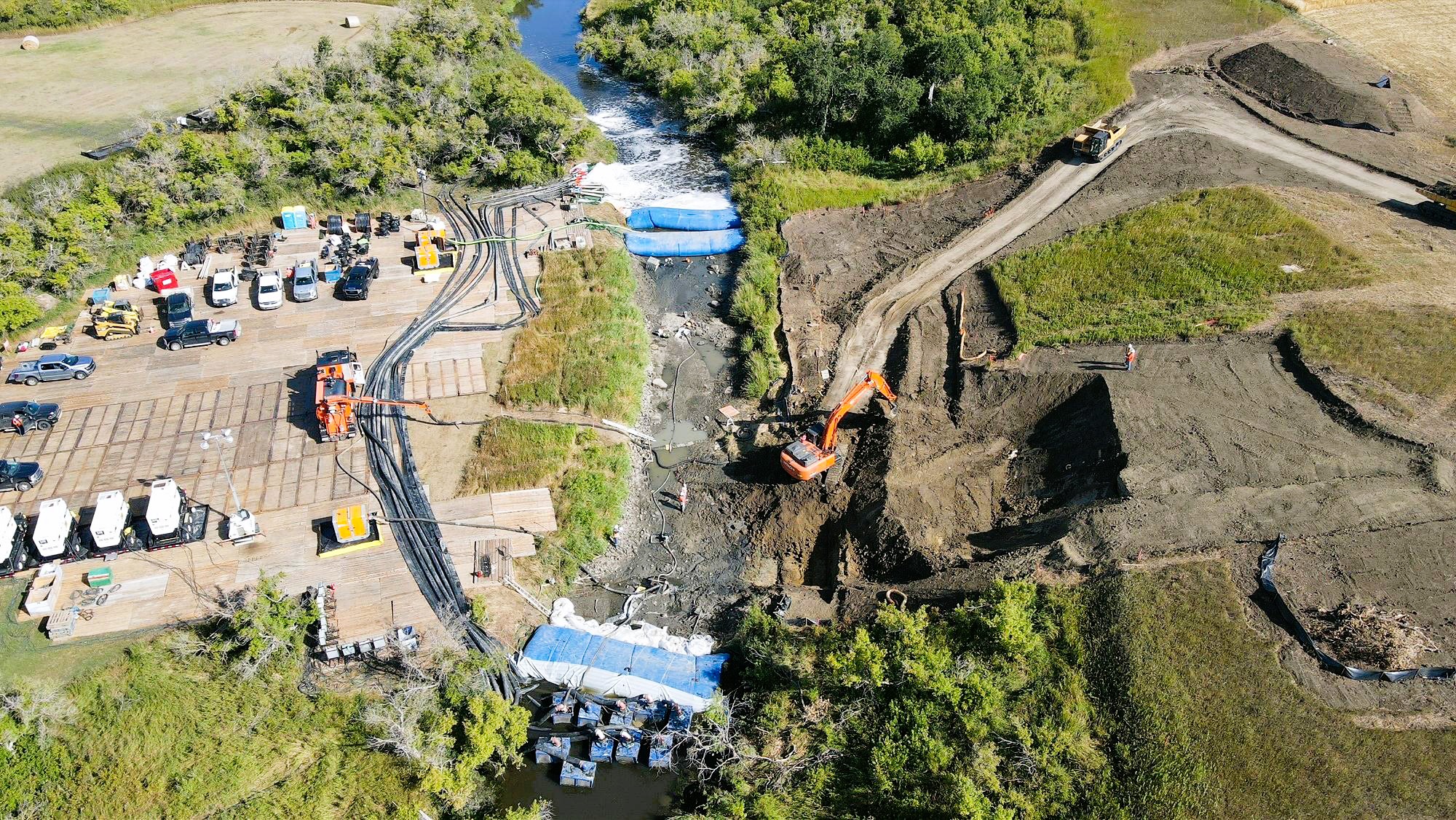
NCS Fluid Systems was brought in to engineer and execute the diversion of a live, fish-bearing watercourse around an active slope repair zone near Kipling, Saskatchewan – keeping the site dry, stable, and environmentally compliant from start to finish. The project was prompted by the reactivation of the Wascana Creek slope failure in August 2024, which threatened downstream infrastructure and demanded immediate action from the project owner.
The Challenge
Wascana Creek doesn’t forgive poor planning. First unstable in 2017 and reactivated in August 2024, the slope failure at Kipling demanded a solution with zero margin for error. The creek runs 24.4 metres wide at the project site, carrying up to 1.0 m³/s – 15,840 gallons per minute – through a fish-bearing watercourse regulated by Fisheries and Oceans Canada (DFO). Every pump inlet required an engineered fish screen. The work area had to be dry. NCS delivered.
Engineering the Solution
NCS based its hydraulic design on Water Security Agency (WSA) historical flow data, supplemented by two to three months of real-time flow monitoring leading into the project. Observing consistent downward trends through the post-freshet season, the team established a risk-calibrated decision on design capacity: 1.0 m³/s at a total dynamic head of 56.0 ft, with a pump duty point of 3,186 GPM. DFO compliance was incorporated into the design from the outset.
Each pump inlet was equipped with a custom-designed fish screen, 3.75 m² of effective area at an approach velocity of 0.055 m/s, sized to the confirmed fish species and flow rate per pump. The full system was configured with 100% primary and 100% standby redundancy, ensuring uninterrupted diversion under all operating conditions.
Diversion System Key Parameters
| Diversion System | Key Parameters |
| Design Flow Rate | 1.0 m³/s (15,840 GPM) |
| Discharge Length | 201.2 m (660 ft) |
| Total Dynamic Head | 56.0 ft (17.1 m) |
| Pump Duty Point | 3,186 GPM @ 56.0 ft TDH |
| Redundancy | 100% Primary + 100% Standby |
| DFO Fish Screen | 3.75 m² effective area @ 0.055 m/s |
| Monitoring | 24/7 NCS technician on-site throughout |
Equipment & Commissioning
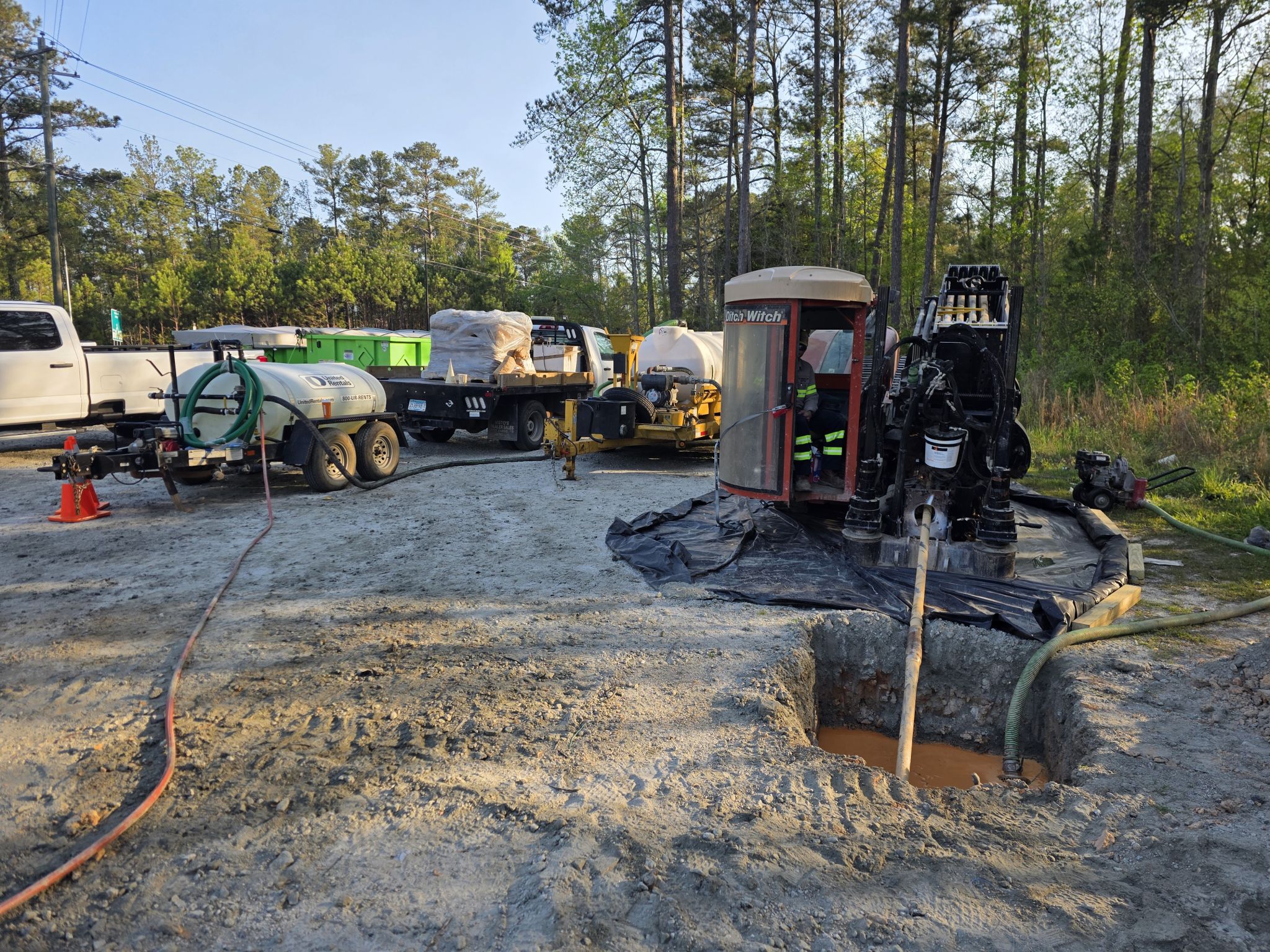
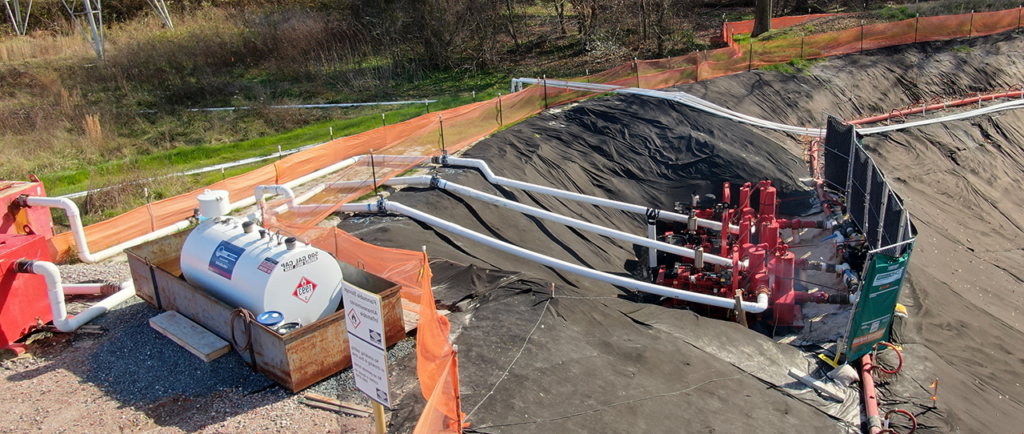
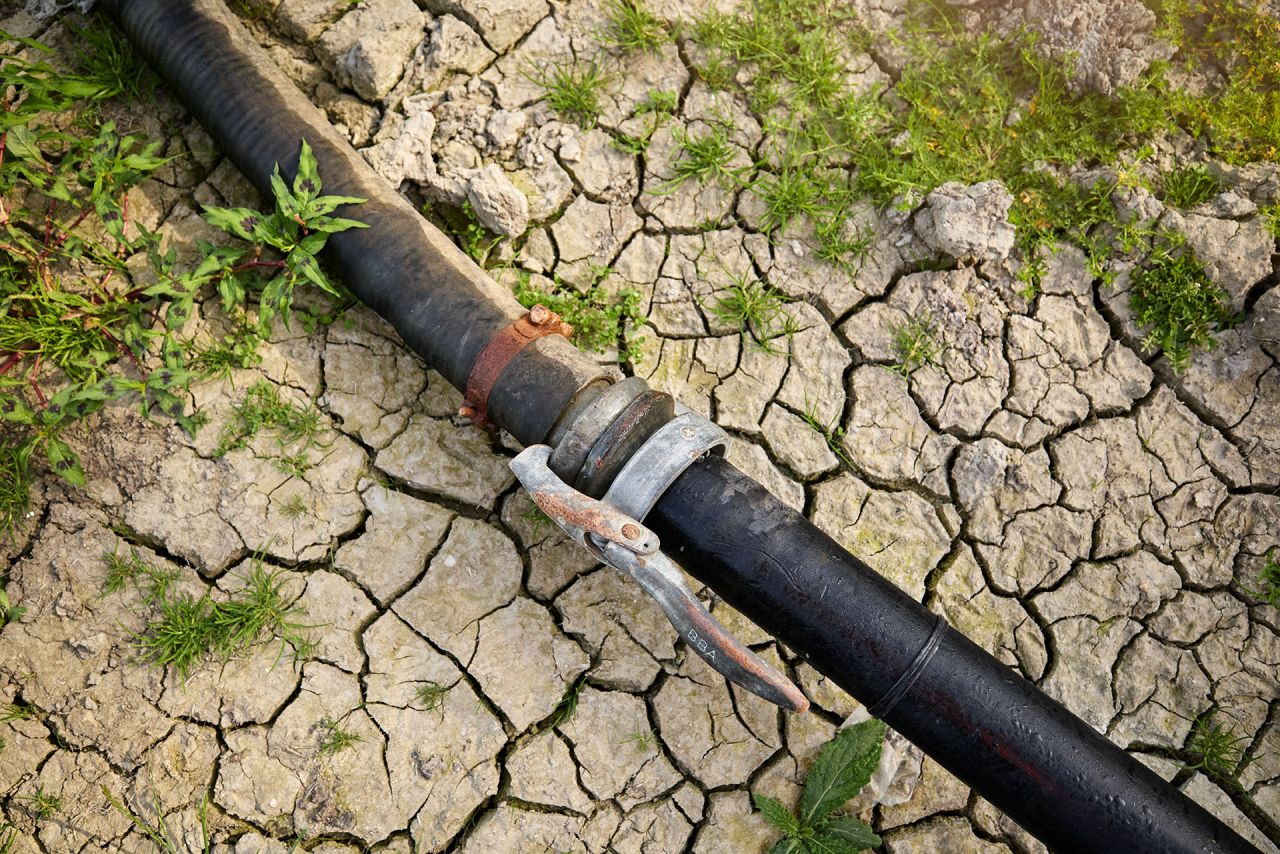
NCS mobilized ten 10-inch electric submersible pumps (five primary, five standby), each paired with a dedicated 250 kW sound-attenuated generator. Ten 10-inch by 660-foot discharge reel hoses completed the conveyance system. DFO-compliant fish screens were installed on all pump inlets, and multiple Aquadams were deployed to fully isolate the construction zone.
Commissioning followed a controlled sequence: fish cages and pumps installed, generators energized, diversion brought online, and inflatable dams placed upstream and downstream. NCS technicians matched pump output to incoming river flow in real time before dewatering the enclosed work area. Fish salvage within the zone was completed by others, and construction began on schedule.
24/7 Operations & Flood Response
NCS maintained continuous on-site presence throughout the project, with trained fluid technicians conducting hourly visual inspections of all pumps, dams, hoses, and containment walls. Spill response kits were staged at each generator location, and a formal emergency escalation protocol was maintained with the client site team.
That protocol was put to the test when the Regina region experienced a rare, unforeseen 1 in 100-year flash flood event. As creek flows surged rapidly, NCS immediately activated its emergency response, bringing all standby pumps online and doubling system capacity to 2.0 m³/s within minutes. The team managed the event with full situational control, protecting the work area and the surrounding environment throughout. Once conditions stabilized, NCS reinstated the diversion system and construction resumed without delay, preserving the client’s schedule.
The NCS Difference
The Wascana River Diversion illustrates what a true fluid systems partner delivers: a fully engineered, DFO-compliant solution built on redundancy, real-time decision-making, and 24/7 accountability. From hydraulic design through emergency response, NCS kept Wascana Creek flowing, the work area dry, and the project on track. When conditions pushed the system to its limits, the team responded with speed and discipline – and the job got done.