From Hölscher Jensen to Hölscher Danmark: local Danish expertise, backed by the wider Hölscher group
After ten years as Hölscher Jensen, the Danish dewatering specialist now operates as Hölscher Danmark. We spoke to the team about what the new name means for their clients, working across borders, their standout projects, and where groundwater control in Denmark is heading.
Your new name: you were previously known as Hölscher Jensen. What led to the change to Hölscher Danmark, and what does it mean for your clients?
The name change follows Hölscher International’s acquisition of CG Jensen’s shareholding, making Hölscher our sole owner. After ten years as Hölscher Jensen, continuing as Hölscher Danmark was a natural next step. We look back on our partnership with CG Jensen with great appreciation. It helped build the team, relationships and experience that we continue to draw on today.
For our clients, this means continuing to work with a Danish company whose people know their projects and the Danish market. At the same time, we are strengthening our connections with Hölscher’s specialists and resources. We want our clients to experience the benefits of that connection through practical support on their projects.
Being part of Hölscher: how does being part of the wider Hölscher group strengthen what you can offer on Danish projects?
Being part of Hölscher gives us valuable options in a specialist field like ours. When we face a difficult task, we can discuss it with colleagues who have worked under similar conditions elsewhere. We can also draw on specialist equipment or additional capacity when a project requires it.
We bring local knowledge and close client relationships in Denmark, supported by experience from across Hölscher. That combination is one of our strengths. It helps us choose the right solution and make it work on site.
“We bring local knowledge and close client relationships in Denmark, supported by experience from across Hölscher.”
Working across borders: can you share an example of a project where you drew on expertise, equipment or people from elsewhere in the group?
Baltic Pipe and Green Gas Pipeline are good examples. Hölscher supplied piston pumps for Baltic Pipe, while Green Gas Pipeline received support with both personnel and piston pumps. These are practical examples of the value of having colleagues and equipment available across borders.
On the South Harbour Metro project, we also drew on groundwater specialists from Hölscher. For us, this shows how collaboration across the group is part of our everyday work on Danish projects.
Standout project: what’s a recent project you’re particularly proud of, and what made it challenging?
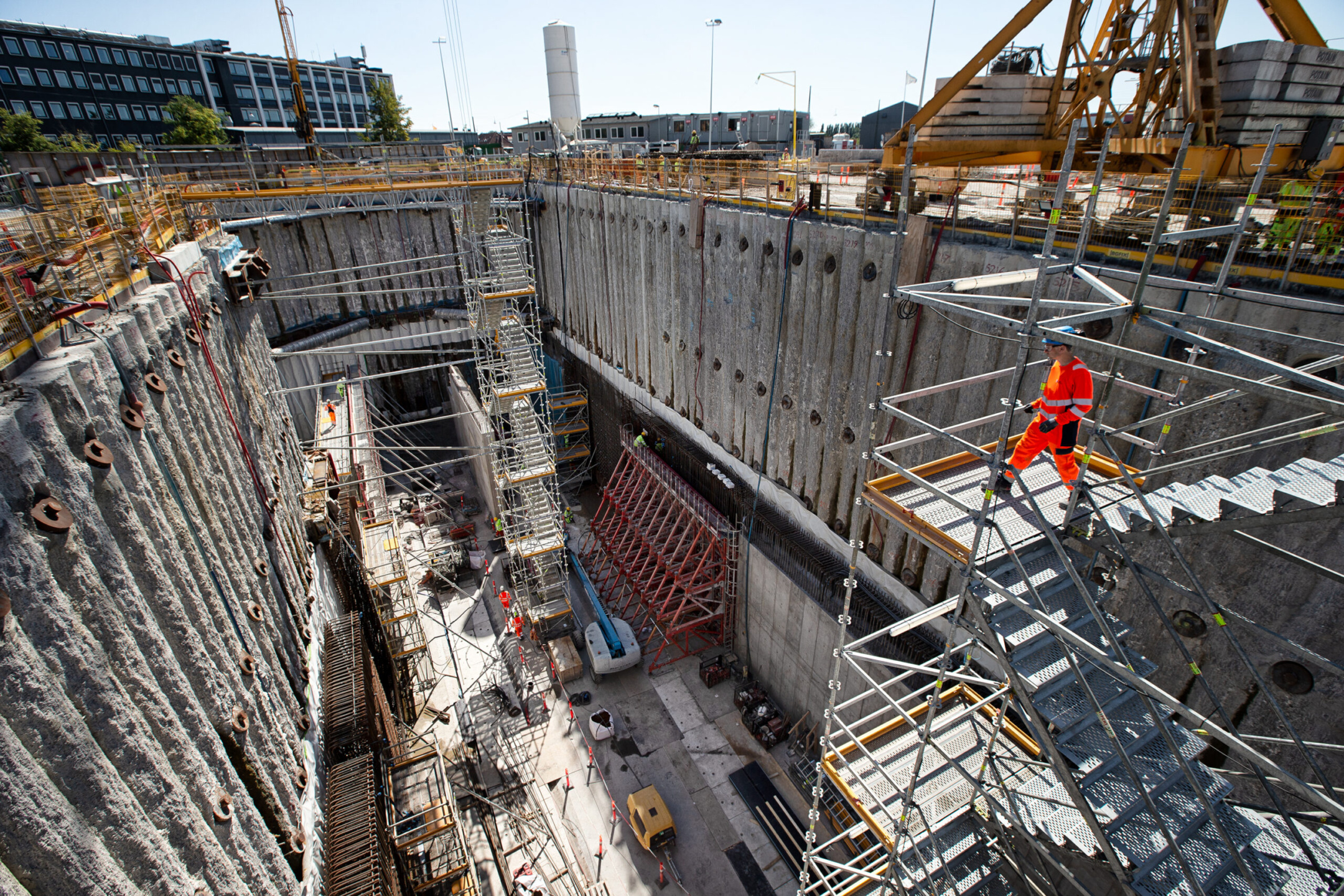
We would highlight the Nordhavn Tunnel. It is a project that demonstrates our team’s capabilities and the importance of close collaboration. We are carrying out an extensive dewatering project for the tunnel between Svanemøllen and Nordhavn.
The scale of the work has required substantial equipment and technical support, both of which Hölscher has helped provide. CG Jensen has also contributed personnel. We are proud of our team’s work and of being able to deliver a project of this scale together with our partners.
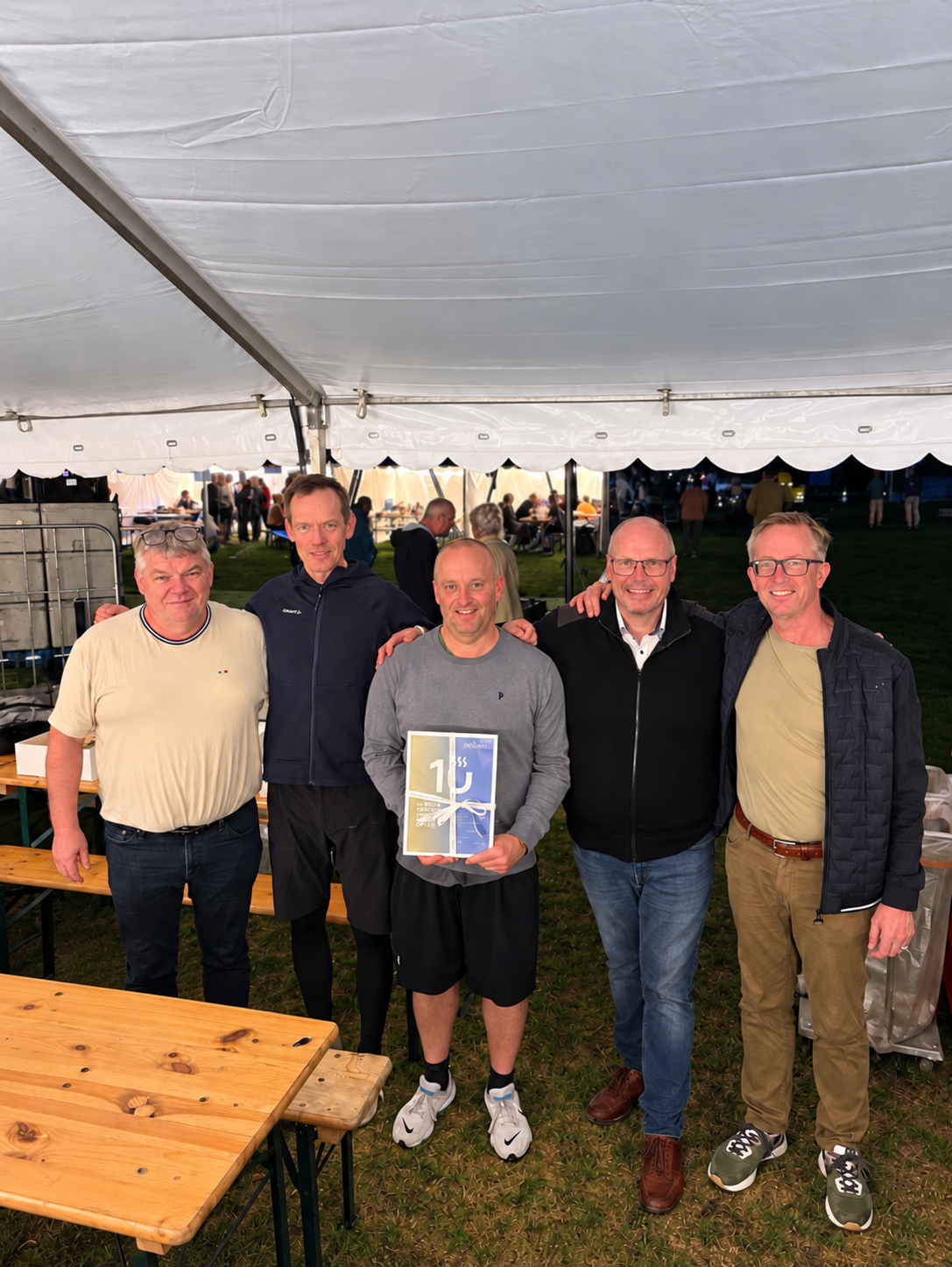
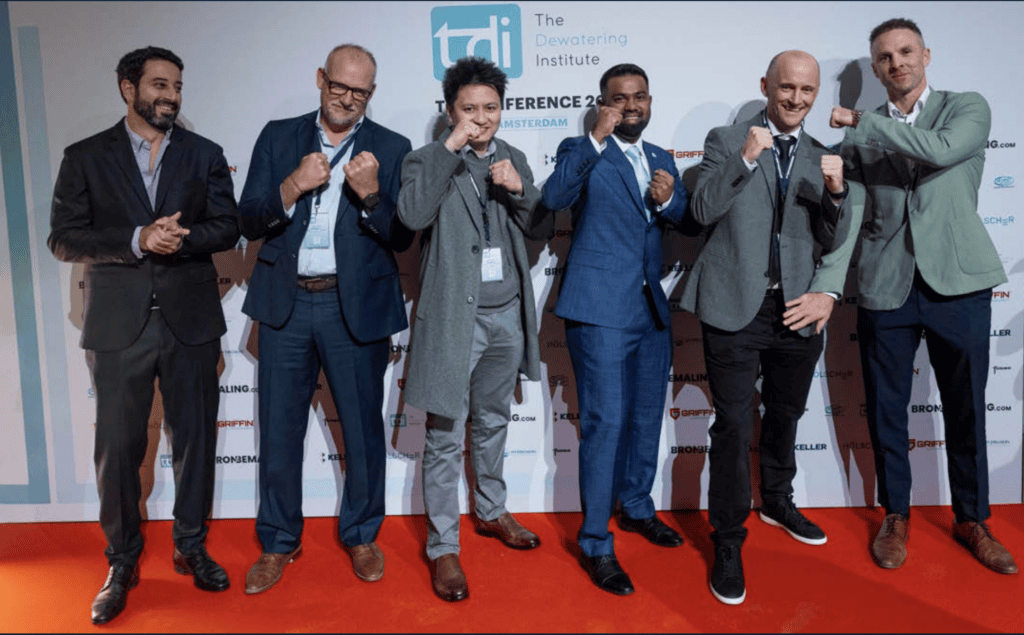
Hölscher Danmark CEO Jan with the “old” board at the company’s 10-year anniversary celebration.
Innovation: are there any new methods, technologies or research you’re currently developing or using?
We use automated control and remote monitoring, as well as modular water treatment systems that can be adapted as conditions change on a project. Through Hölscher, we also have access to experience in treating contaminated water, including PFAS.
For us, new technology needs to make a practical difference. It should help us understand site conditions, operate our systems and document our work. We are also interested in how we can protect water resources and make better use of the water we handle. Our Water Positive Vision sets a direction for that ambition. We want to continue developing it and translating it into practical solutions.
Your people: how do cross-border collaboration and work placements help your team grow?
We have welcomed interns from Germany with connections to Hölscher, and colleagues from our Danish team have spent time working in Germany. This gives people the opportunity to learn different methods and see how colleagues approach their work. We also bring our own experience into those exchanges.
We want our people to have opportunities to develop and take responsibility. That takes support from colleagues and the freedom to work through tasks themselves. Our work is technical, but it is our people and the way they work together that make projects succeed. Developing our team is therefore closely connected to developing the company.
“Our work is technical, but it is our people and the way they work together that make projects succeed.”
Industry outlook: what do you see as the biggest challenges or opportunities in groundwater control in Denmark over the next few years?
We see one of the biggest challenges as bringing dewatering, water treatment and protection of water resources closer together. Water quality can be a challenge, including contamination from PFAS and other pollutants. This affects how we investigate, treat and document water on a project.
Water quality and the protection of water resources are gaining increased societal and political focus, and our expertise creates opportunities to address these challenges and contribute positively to the broader public, now and in the future.
There is also an opportunity to involve groundwater specialists earlier. When groundwater conditions are considered during planning, we have a better basis for choosing a solution that suits both the construction work and its surroundings. We see considerable potential in solutions that reduce resource use and protect groundwater. This is an area where our expertise can make a useful contribution.
Looking ahead: what’s next for Hölscher Danmark?
We want to build on our Danish organisation and make even more active use of collaboration across Hölscher. Strengthening our technical skills and giving more people the opportunity to develop with us will help us prepare for the projects ahead.
We also want to be involved earlier in discussions about projects. We can contribute from initial advice and system design through to installation, operation and documentation. Our ambition is for clients to see us as a partner who takes responsibility for water throughout the project. Our new name makes our connection with Hölscher clearer, and we look forward to showing what that means in practice.
“Our ambition is for clients to see us as a partner who takes responsibility for water throughout the project.”
Become a TDI Member
Are you ready to become a part of a growing global community and develop the dewatering industry worldwide? Become a member of TDI today by going to www.dewateringinst.com to register online, subscribe to our newsletter and follow us on social media.