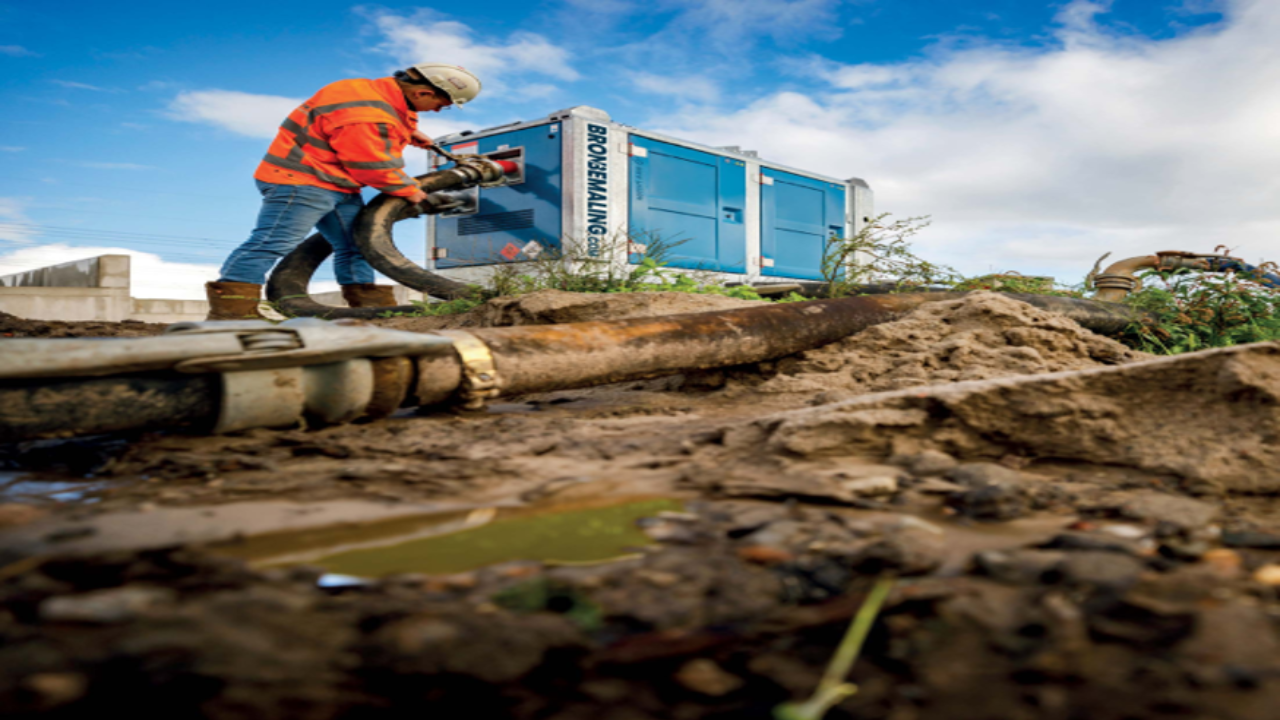
In Conversation with Guido van Tongeren, Owner & Director, Bronbemaling.com | Flexpumps | Techninė Instaliacija (Lithuania) | Board Member, Bouwend Nederland (Groundwater Management) | TDI Advisory Council Member
When Henk van Tongeren founded the company in 1949, he could not have known that three generations later his grandson would be at the helm of one of the largest water technology and dewatering groups in the Netherlands — and helping to shape the future of the global industry.
There are few names in the Dutch dewatering industry as deeply rooted as Van Tongeren. We spoke with Guido about his legacy, leadership, innovation — and, inevitably, football.
Guido van Tongeren took over as director in 2013 and became sole owner in 2017. Today, the Van Tongeren Group encompasses several specialised companies, including Henk van Tongeren Water & Techniek, Theo van Velzen, Raaijmakers, Tjaden, and Beemsterboer. A few months ago the group was rebranded as Bronbemaling.com. Under his leadership, the group doubled in size in 2021 through strategic acquisitions, achieving nationwide coverage across the Netherlands. Beyond his role as a business leader, Guido serves on the board of Bouwend Nederland — the Netherlands’ leading trade association for construction and infrastructure — where he represents the underground networks and groundwater management sector.
Career & Heritage
You represent the third generation of your family in the dewatering sector. What does that legacy mean to you, and what responsibility does it bring?
Those are two truly important things — the legacy of a family business, and the responsibility that comes with working with something as remarkable as groundwater.
I literally grew up in the family business. From a very young age I would go along with my father to various projects. By the time I was eleven, I had my first real part-time job with the company.
Sadly, I only knew my grandfather Henk van Tongeren briefly, as he passed away when I was six years old. But beyond the family you are born into, you also find family among the colleagues whose own families have sometimes worked in the business for generations. That feels like family too. Just recently, for example, we celebrated my colleague Mees Joosten’s 50-year service anniversary. Even though I took over the business from my family in 2017, that feeling of family has never left. It is a culture and a deeply held value that you carry with you. My father is 72 and still works a few days a week — most recently he travelled to Mozambique to teach wellpoint installation. I have three children of my own, and my 14-year-old son already comes along from time to time.
Dewatering & the Industry
The Netherlands is one of the most technically demanding environments in the world for groundwater management. What sets Dutch dewatering expertise apart?
The Netherlands is, in many respects, a large city-state. You could compare it in some ways to Singapore or Dubai — a wealthy country with a high groundwater table, where dewatering is required almost everywhere.
There are also significant challenges. We have twelve provinces, twenty-one water authorities, and four hundred and thirty-two municipalities. On top of that, every square centimetre of land is planned and regulated.
Dewatering is often carried out as a subcontract to a main contractor — it is, in a sense, a service or an enabling construction. I see parallels with scaffolding companies, though there are differences too. For us, the water authority is the most important regulatory body from which we must obtain permits, and by whom we are inspected.
The level of organisation required is therefore high, and this in a densely populated country with an enormous number of competing third-party interests. We have to navigate this in a flexible and efficient way. I genuinely believe that this is where the Dutch truly distinguish themselves.
Sustainability and responsible groundwater management are becoming increasingly important in the sector. How is Bronbemaling.com addressing this challenge?
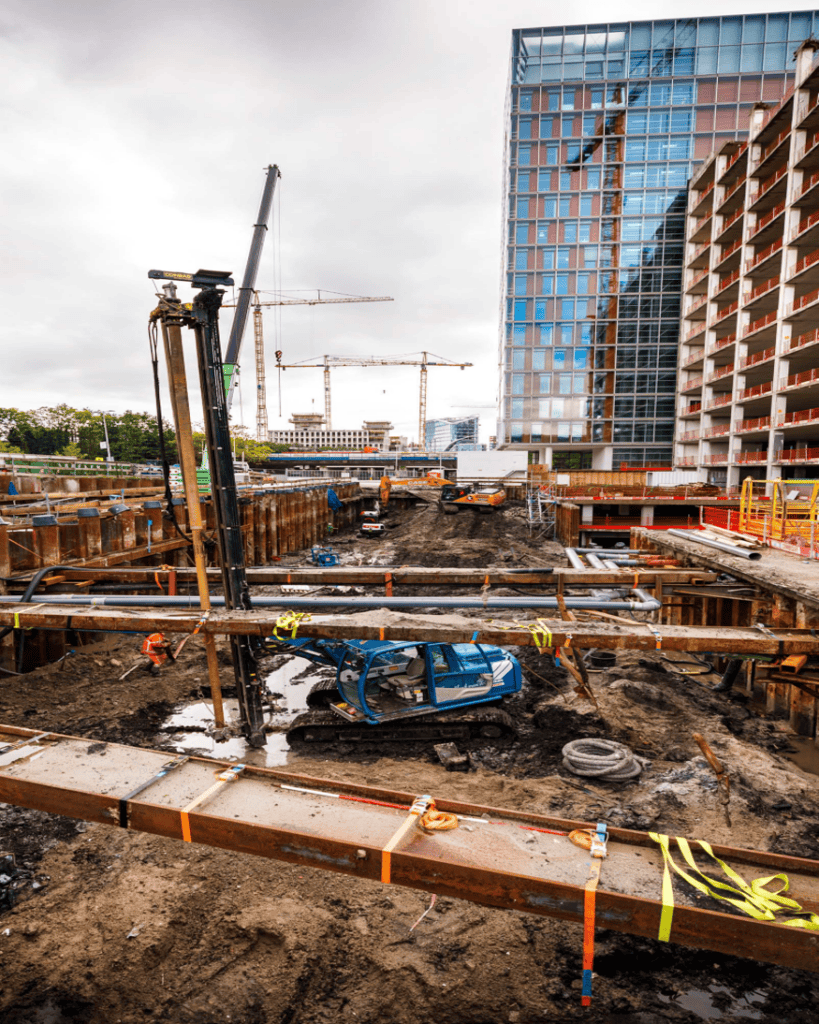
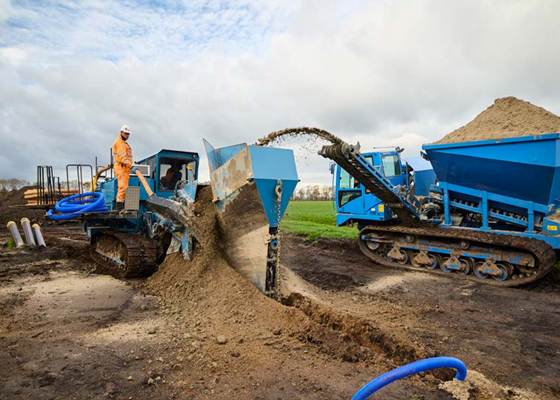
By the end of 2027, we are required to comply with European regulations governing both the quantity and quality of water in the Netherlands. This will have consequences for, among other things, the discharge of water from dewatering operations. Significantly more water will need to be infiltrated back into the ground when dewatering is carried out. In this area, we are the market leader in the Netherlands. Later this year we will be launching new applications in this field, giving us a genuinely sustainable alternative. Innovation is extremely important to us — it is the cornerstone on which the business was built, and it is what keeps us ahead of the market.
Do you feel that TDI has contributed to bringing the global dewatering industry together?
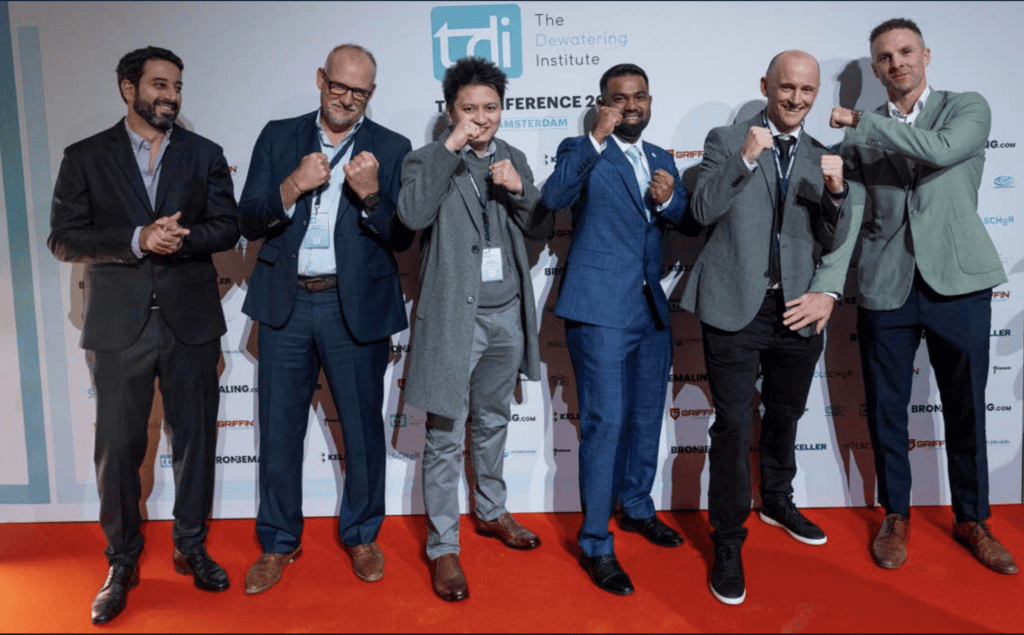
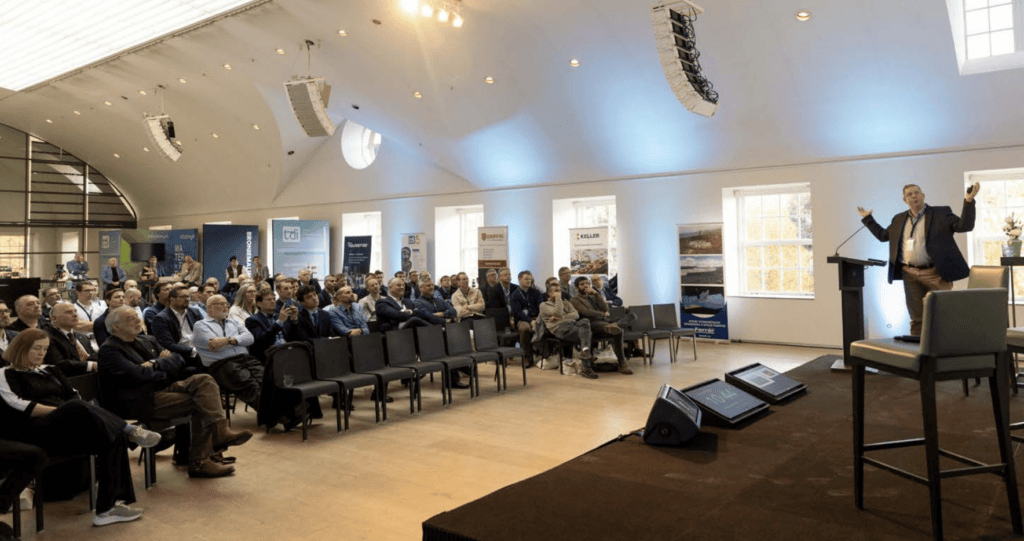
Absolutely, without question! The conference in Amsterdam was truly wonderful. We need to do this much more often. TDI could also be a great platform for organising what I would call ‘groundwater business trips’ between conferences — opportunities for knowledge exchange and collaboration outside of the formal congress setting.
What do you see as the biggest challenges and opportunities for the dewatering sector in the coming years?
The core challenge is staying lean and mean. The discharge of water and the energy consumption of our installations make us vulnerable to alternative techniques. We have a strong position in the world, but we cannot lose sight of total costs — because if we do, other techniques will emerge that make us redundant. On top of that, politicians around the world are becoming increasingly populist, leading to poorly considered decisions aimed at pleasing their electorate.
And finally, we work extensively with a scarce resource: fresh, drinkable groundwater. That does not make dewatering any more popular.
Looking back over the past five years with TDI, which developments stand out most to you as a member?
By organising a major conference, TDI has come of age. There is a clear before and after.
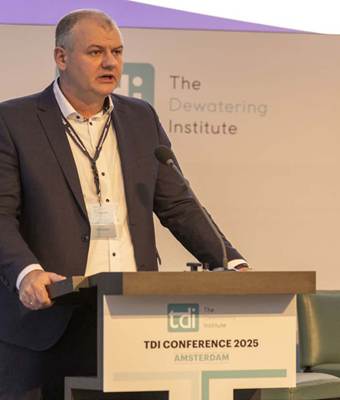
Reflecting on the recent conference in Amsterdam, what were your key takeaways?
In terms of content, I have nothing to add — they were exceptional days. My main takeaway? Don’t wait another five years for the next one.
Looking ahead, what do you see as the most important priorities for TDI in the near future?
More conferences — ideally every two years. Training, both virtual and in person, because there is enormous potential within and beyond our organisations. Trade delegations, focusing on the value of supplier relationships, knowledge exchange, and technology distribution — the idea of groundwater business trips.
Broadening the group beyond dewatering to include pumping, ground drilling, and drainage, because a larger group creates more possibilities. And finally, acting as an employer organisation — ensuring that TDI has a seat at the table with the relevant authorities.
“Alone you go faster, together you go further.”
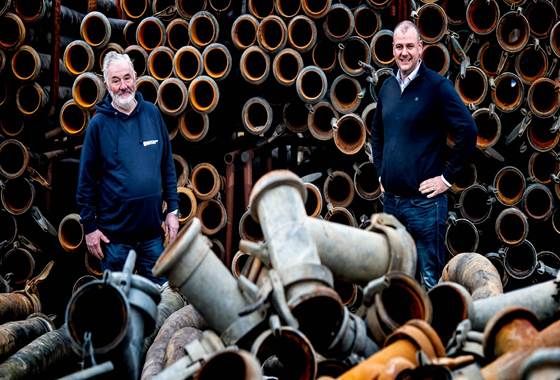
Beyond Work
You are well known in the Netherlands as a passionate supporter and sponsor of Go Ahead Eagles. How did that connection come about?
That is also very much a family thing — the most important sideshow in life, as I like to say! I think I was about five years old the first time I went to see Go Ahead Eagles, or as we call them, ‘Kowet.’ I was hooked from that very first moment. My brother John and I share a skybox together, and our father and our sons are always there with us.
The 2025/2026 season was truly magical. Winning the national cup was the absolute highlight, but we also beat Panathinaikos FC in Athens and then Aston Villa at home in Deventer — all on the road to the Europa League. Incredible times.
What is the most important lesson you have learned from leading a growing company in a rapidly evolving sector?
The most important lesson is that you absolutely cannot do it alone. You have to use your leadership to build a well-oiled machine from your team, and that only happens by placing genuine trust in the people around you. Alone you go faster — together you go further.
Is there something in your day-to-day work that still genuinely excites you, even after so many years in the world of dewatering?
The fact that you and your team can be so resourceful that you solve seemingly impossible problems for your clients, enabling projects to move forward. That still gives me a kick every single day.
What is your life motto?
I have never really thought about it in those terms, but perhaps it sits somewhere between Pippi Longstocking and my father.
“I’ve never done it before, so I think I can.” — Pippi Longstocking
“You are too easily afraid.” — Allard van Tongeren