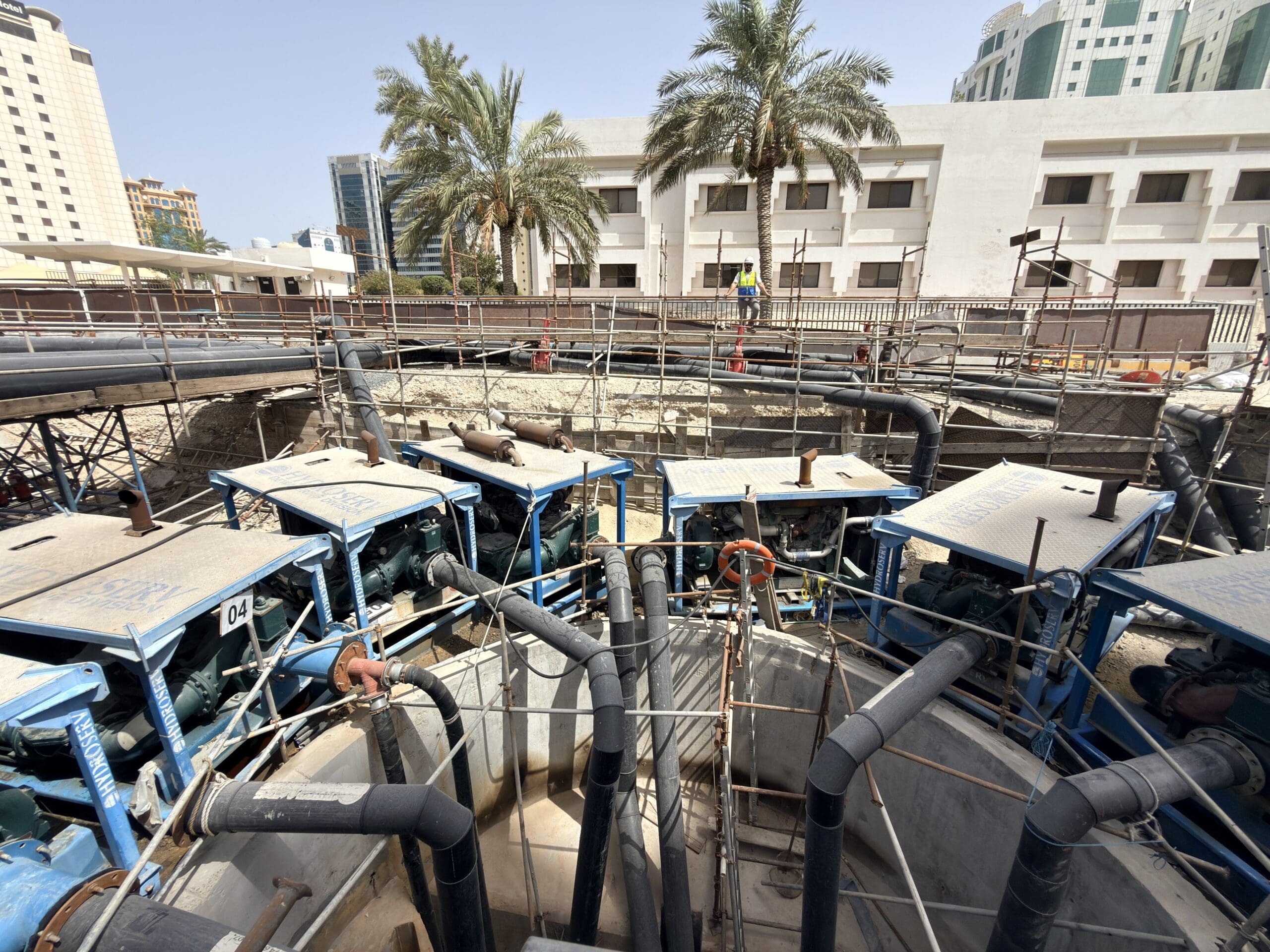
In Conversation with Ayman Abou-Elmaaty Elsayed, Operations Manager at Hydroserv International.
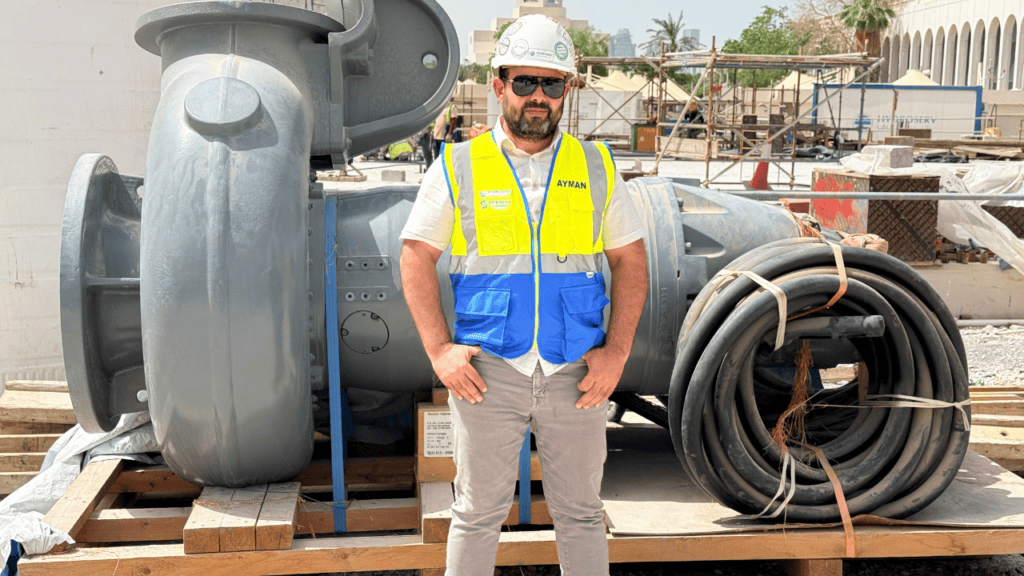
Ayman Abou-Elmaaty Elsayed is the Operations Manager at Hydroserv International, where he has built a reputation over the past eight years for delivering efficient field operations across some of the most demanding construction and infrastructure environments in the world. With more than 20 years of hands-on experience spanning water desalination, treatment, and dewatering, Ayman brings a rare depth of technical knowledge and practical field expertise to every project he leads.
We spoke with Ayman about life in the field, the evolving world of dewatering, and what still drives him after two decades in the industry.
Career & Background
You’ve worked across Egypt, Qatar, and now internationally — what has that journey looked like?
In 2003, I began my career as an engineering officer in the Egyptian Armed Forces, specialising in the operation and maintenance of seawater desalination plants, water pumping stations, and pipelines. After completing my military service in 2006, I moved into the private sector, working across water desalination and treatment — starting as a maintenance engineer and eventually rising to Operations and Maintenance Manager by 2016.
That same year, an opportunity took me to Qatar as an Environmental Manager on a major infrastructure project, covering dewatering works, deep injection wells, and two water treatment plants.
In 2018, a friend mentioned an opening at Hydroserv International for an Operations Manager in dewatering.
During my interview with Barry, I kept telling him I had no experience in dewatering and wasn’t the right fit. He disagreed — and told me to give myself some time. Eight years on, I can say he was absolutely right.
“Success comes from right decisions, right decisions come from experience, and experience comes from wrong decisions.”
With over 15 years of hands-on field experience, what does a typical day look like for you on site?
My day typically starts between 5:00 and 6:00 AM, reviewing overnight updates from the night shift team to make sure everything is running smoothly.
From there, it’s straight to site — holding team meetings, identifying issues, and meeting with main contractors, consultants, and project owners to discuss progress, modifications, or additional works. Safety checks are a non-negotiable part of every site visit, and I always make time to listen to team members, whether the conversation is work-related or personal.
The day wraps up back at the head office, coordinating with management, design, procurement, and transport teams to stay on top of equipment deliveries and any upcoming project changes. In this role, no two days are exactly the same — but the focus is always the same: keep the teams supported and the projects moving.
Life in the Field
What do you enjoy most about working in the field versus being office-based?
Field work has unique advantages that office life simply cannot offer. I genuinely enjoy the direct interaction with people across different sites, processes, environments, and challenges. There is something deeply satisfying about witnessing daily progress in installations and commissioning, the ongoing successes in meeting work requirements, satisfying clients, resolving their problems, and ensuring work proceeds according to design and agreed timelines.
What are the biggest challenges you face on site that people in the office don’t always see or understand?
Field work presents challenges that office staff often overlook. Physical hazards such as heavy machinery, electrical systems, and working at heights — combined with noise, dust, and in Qatar’s case, extreme summer heat — make tasks more demanding, slower, and more dangerous than a structured office environment. Field workers must balance technical precision, safety awareness, and physical endurance simultaneously, which can be mentally exhausting in ways that are difficult to appreciate from the inside.
What’s the most demanding project environment you’ve ever worked in, and how did you manage it?
The most demanding projects of my career were those undertaken by Hydroserv International in preparation for the 2022 FIFA World Cup — designing, supplying, installing, and commissioning large-capacity stormwater pumping systems, the first of their kind in the Arabian Gulf, all within a very tight deadline.
Managing it required tight coordination across every function — design, site teams, warehouse, procurement, and main contractors — to keep materials moving and issues resolved before they caused delays. Shift rotations were also implemented to keep the team sharp and prevent burnout.
The pressure was immense, but delivering those systems on time remains one of my proudest professional achievements.
Skills & Problem Solving
When something goes wrong on site, what is your process for solving it quickly under pressure?
The first priority is always the safety of the team — confirming everyone’s well-being before anything else. From there, I encourage rapid collaboration among all team members to identify the fault or problem. The maintenance and safety teams are then engaged to prioritise and address the most critical issues first. Quick decisions are made to implement temporary solutions to restore the system, followed by a permanent fix and a full overhaul. Finally, a comprehensive report is prepared on the problem, its causes, and the solutions applied, and this is shared with wider company staff so that lessons are learned and future recurrences prevented.
What skills do you think are essential for someone working in field operations in this industry?
The most essential skills are a strong technical knowledge of pump systems and hydraulics, rigorous safety awareness, and the ability to troubleshoot and maintain equipment under demanding site conditions. Success in this role also requires effective teamwork, adaptability, and a solid understanding of environmental regulations and compliance.
Industry Perspective
How has the dewatering and water treatment industry changed over the years, from what you’ve seen on the ground?
Since the early 2000s, the industry has undergone a significant transformation. In those earlier years, operations relied on basic, labour-intensive methods such as drying beds and lagoons — processes that prioritised low cost over efficiency and were primarily used in small municipal and mining projects, often dependent on chemicals that were time-consuming, costly, and less effective.
Over time, the industry shifted toward mechanical equipment such as centrifuges, belt presses, and screw presses. The introduction of automation and sensor technology made systems smarter, more efficient, and capable of handling much larger volumes. Simultaneously, increasingly stringent environmental regulations pushed industries to recycle water and reduce waste, expanding the use of advanced treatment systems across large-scale construction, oil and gas, and mining projects where efficiency and sustainability became critical considerations.
What technology or equipment has made the biggest difference to how you work in the field?
A wide range of equipment has had a significant impact on field operations — not only drilling rigs, but also fusion welding machines, advanced monitoring systems, high-capacity filtration units, clarifiers for water treatment, robust shoring systems for excavation stability, and precision grouting systems for structural reinforcement. Each of these tools contributes to efficiency, safety, and reliability on complex engineering projects.
Technology has been equally transformative. Innovations such as deep-well drilling for dewatering and ground injection, advanced water treatment and pumping systems, and integrated monitoring and control platforms have enabled projects to reach greater depths, manage groundwater more effectively, and maintain real-time oversight of critical processes. These advancements not only improve performance but also reduce environmental risks and operational costs.
People & Culture
What do you wish more people understood about the work that happens on site?
Dewatering is far more than simply removing water from a site — it is what makes modern construction possible. By lowering groundwater levels, we keep soil stable, protect structural integrity, and create safe working conditions for everyone on site. Without it, foundations, tunnels, and basements are all at risk.
Beyond safety, controlled water means faster progress, fewer delays, and significant cost savings. Environmental responsibility is equally important — discharge water must be managed carefully to protect surrounding ecosystems.
And none of it happens alone. Engineers, pump operators, and safety teams work closely together, because on a dewatering project, communication and coordination are just as critical as the equipment itself.
What advice would you give to a young engineer or technician just starting out in field operations?
Build a strong foundation in the basics — understand how groundwater affects soil stability, learn the main dewatering methods, and always keep safety as your top priority. Pay close attention to site conditions, monitor water levels regularly, and be prepared to adapt systems as conditions change. Effective communication and cooperation with your team are equally vital, as smooth operations depend on shared understanding and mutual support.
Be prepared for physically demanding work under pressure, and find a way to enjoy the challenges — a positive attitude turns tough conditions into opportunities for growth. Just as importantly, teach and look out for your colleagues. Shared knowledge and mutual respect are what strengthen both safety and success on site.
Personal
What keeps you motivated after more than 20 years in such a demanding field?
Motivation comes from the blend of technical challenge, visible impact, and continuous growth. Every project brings unique problem-solving opportunities, and there is real pride in knowing that without effective dewatering, critical structures like tunnels, foundations, and pipelines simply could not be built.
The field evolves constantly, which keeps the work fresh. Beyond the technical side, mentoring younger engineers and watching them grow into confident professionals is equally rewarding.
Working in the Gulf adds another layer of complexity — high groundwater tables, saline intrusion, extreme temperatures, and strict environmental regulations all demand specialised expertise. That sustained challenge is, in itself, a source of motivation.
What is your life motto?
“Even if you fall, rise again; even if you fail, keep trying.”