How RPS 368 Became a Model for Smarter, Sustainable Groundwater Management
Interview with David Wright
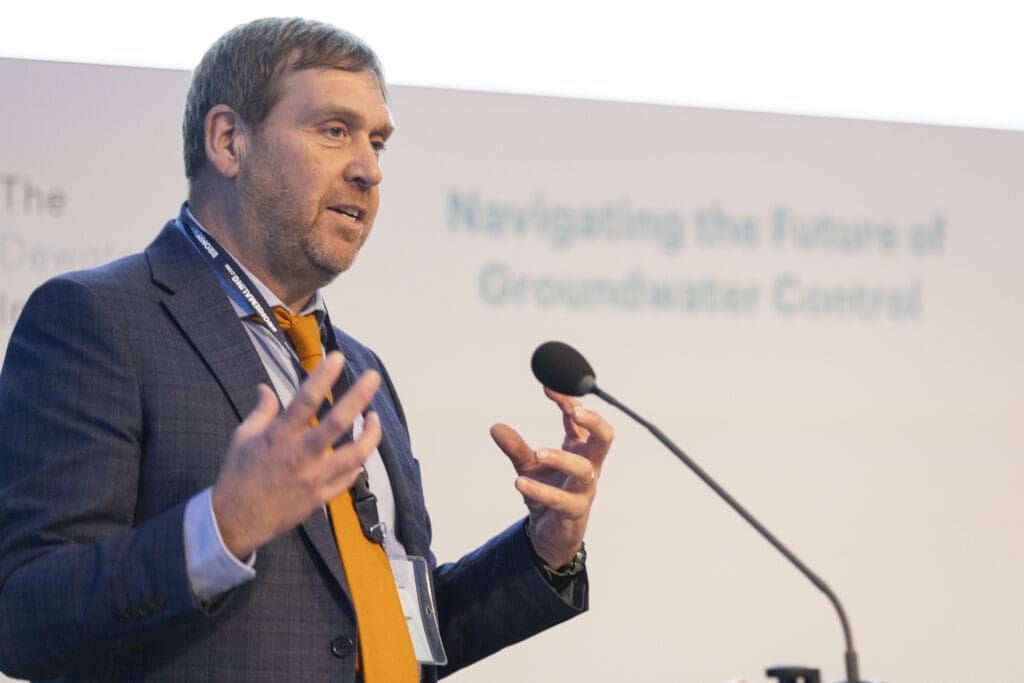
David Wright is the Managing Director of Stuart Wells Limited and one of the leading voices in the UK construction dewatering industry. As a founding member of The Dewatering Institute (TDI), he played a direct role in consulting with the Environment Agency (EA) to help shape the new Regulatory Position Statement (RPS 368), launched on 23 April 2026. His close involvement in the reform process makes him uniquely qualified to explain what these changes mean for contractors, site managers, and everyone working in groundwater control across England.
The Big Picture
In simple terms, what changed on 23 April 2026 — and what does it mean for people working on construction sites that need to pump out groundwater?
The Environment Agency has published Regulatory Position Statement (RPS) 368 on construction dewatering, which aims to remove low-risk dewatering activities from abstraction licensing requirements.
The RPS outlines conditions — key ‘dos and don’ts’ — and if contractors comply, enforcement action won’t be pursued. These conditions better reflect typical UK dewatering projects and take a more pragmatic, risk-based approach. They acknowledge that, with appropriate controls, dewatering can be carried out efficiently without unnecessary delay.
In practice, the changes give the construction and civil engineering industries a viable, environmentally responsible, and competitive way to manage groundwater.
How long has the industry been pushing for these changes, and what finally made the government and the Environment Agency listen?
It’s been a difficult few years for those involved in construction dewatering. Regulations on groundwater abstraction have been in place since 2018, but compliance pressures started rising significantly from 2020 onwards.
The licensing process had become slow and complex, sometimes requiring over thirty documents and numerous guidance notes — making dewatering seem like a last resort. As a result, many contractors turned to less sustainable alternatives, such as more concrete and steel, or heavy use of grouting. Ironically, these choices caused long-term harm to aquifers and the broader environment.
By 2023, I began writing to regulators, MPs, and ministers to raise awareness of the issue, but progress was slow. It wasn’t until the new UK government came to power later in 2024 with a focus on growth and deregulation that we made real headway. Through open discussions, we found ways to work within legal frameworks to create a more balanced, practical approach. This eventually led to the development and consultation of what is now RPS 368.
“In practice, the changes give the construction and civil engineering industries a viable, environmentally responsible, and competitive way to manage groundwater.”
Day-to-Day Impact on the Job
Before this change, contractors sometimes waited 6–9 months just to get permission to pump. What did that delay look like in practice?
The industry understands and supports the need for groundwater abstraction licences when they’re proportionate to environmental risk. Contractors are not opposed to paying fees or meeting requirements — what matters is fairness and practicality.
Before the RPS, it could take 12 to 18 months to obtain an abstraction licence for temporary construction dewatering. That’s simply unworkable for most projects unless dewatering needs are identified very early.
Adding to the challenge is how risk and responsibility often get pushed down the supply chain, from the client to consultants, to the main contractor, and finally to dewatering specialists. By the time the need for a licence becomes clear, it’s often too late.
Under the new rules, what can contractors now do that they couldn’t before — and how quickly can they start work?
The new rules don’t remove the need to plan ahead or assess groundwater risks early in a project. Contractors still need a conceptual dewatering design developed during the planning stage. This helps determine whether the project meets RPS 368 conditions and what licensing route is applicable.
For qualifying projects, contractors can register their activity online with the EA and begin work much sooner, avoiding the lengthy licensing delays seen in the past.
What key conditions must site managers or contractors meet to stay compliant under RPS 368?
If the project fits within RPS 368, it must be registered with the Environment Agency via an online notification process.
Contractors must also:
- Complete a Hydrogeological Impact Assessment (HIA) to prove compliance.
- Prepare a Project Groundwater Management Plan to identify and mitigate environmental and pollution risks.
- Record daily abstraction volumes and retain these records for at least two years, available to the EA on request.
Compliance relies on proper planning, robust documentation, and record keeping.
The new RPS recognises the ability to recharge abstracted groundwater back into the aquifer. How significant is that?
Perhaps the most important component of the new RPS is that it recognises the unique ability to mitigate aquifer depletion by recharging abstracted groundwater directly back into the same aquifer, provided the water hasn’t been used for another purpose. The RPS allows this for up to nine months, with no volume limits.
Space constraints in UK construction can make recharge systems challenging, but it’s an area the industry should embrace — it’s a sustainable way to manage groundwater resources.
Compared to alternatives like steel sheet piling or concrete barriers, dewatering has a smaller environmental footprint. Does the new regulation make it easier to make that case?
Absolutely. Sustainability is no longer optional — it’s fundamental to modern construction and corporate responsibility. Dewatering is inherently more sustainable than many physical groundwater barriers, generating less carbon and causing fewer long-term impacts on aquifers.
However, we must improve further and encourage moving towards synthetic fuels, electric drilling rigs, and high-efficiency pump technologies such as permanent magnet motors and variable speed drives. We’re also promoting recycled materials — for example, using recycled glass as filter media — and exploring biodegradable plastics for well liners.
What Went Wrong Before
Can you share an example of a project that ran into problems because the old system made dewatering too difficult or slow?
We’ve seen cases where projects were redesigned just to avoid licensing delays. For example, a proposed small sub-surface shaft was replaced by a large surface tank because obtaining a licence would have taken too long. That decision used up valuable space and limited future development on the site. In other instances, projects were simply shelved altogether because the licensing process would have delayed completion beyond acceptable timelines.
In March 2022, a change made things even harder for wellpoint and borehole dewatering. How bad did it get?
The updated guidance to Regulation 5 in March 2022, which removed exemptions for wells and boreholes, was a turning point. It effectively excluded two of the most common dewatering techniques and made the industry’s situation untenable. It was then that I realised we risked regulating the very practice of dewatering out of existence, which motivated me to push for reform.
What Happens Next
The new rules currently only apply in England. What should contractors in Wales, Scotland, and Northern Ireland know?
For now, RPS 368 applies only to England. However, Natural Resources Wales (NRW) is expected to review the approach following the recent Senedd elections. Over time, NRW will likely introduce similar provisions. In Scotland and Northern Ireland, dewatering is already regulated under General Binding Rules (GBR) managed by SEPA, which are broadly comparable to the new EA framework.
Do you see this as part of a wider shift in how environmental regulation works in UK construction?
Yes. There’s a genuine shift in mindset among regulators towards frameworks that protect the environment while being proportionate and workable. The EA’s long-term strategy (EA2030), along with major policy reviews such as Defra’s Corry Review and the Cunliffe Report, are shaping a more streamlined system.
I hope RPS 368 is just the start. The next logical step would be a single, online application process covering both abstraction and discharge — a one-stop system for all applications that’s transparent and efficient.
What’s your advice to the industry on using these new rules responsibly?
The new RPS is built on trust between the EA and industry. We must protect that trust by demonstrating integrity, technical understanding, and proper record keeping.
Every contractor using RPS 368 must do so correctly by assessing risks, putting controls in place, and maintaining documentation. The Environment Agency will review RPS 368 by 31 December 2027, and the future of these reforms depends on our collective track record. Used responsibly, RPS 368 can help rebuild confidence, improve sustainability, and reinforce dewatering as the positive, cost-effective, and environmentally sound solution it has always been.
“Used responsibly, RPS 368 can help rebuild confidence, improve sustainability, and reinforce dewatering as the positive, cost-effective, and environmentally sound solution it has always been.”
A Message for the Global Industry
RPS 368 applies specifically to England, but the challenges it addresses will be familiar to professionals around the world. What message would you send to the global dewatering community?
One thing I learned from speaking to fellow delegates at the TDI Conference in Amsterdam last year was that we all seem to be operating under some form of regulation and control. The USA has differing regulations from state to state, and the Middle East has strict parameters on discharge quality and quantity. As a global industry, I believe it is important for us to comply with regulations and to be seen as environmentally responsible. We have to communicate clearly how regulations may impact a project with the client and develop processes to work within the regulatory system.
Ultimately, it’s critical that we always do the right thing and operate to the highest standard, even in the most frustrating of circumstances. However, if we do see that regulations are having a detrimental impact, or that competing industries appear to benefit from a lighter regulatory touch, we must speak up about it. It’s never easy — but as demonstrated in the UK, focused, competent, and persistent arguments can pay off.